Finding safety management software that combines operational, financial, and compliance tools for service businesses without high cost or complex deployment is difficult. Most platforms hide pricing behind sales calls or demand large IT resources before you see how tools work together. This comparison covers ease of implementation, pricing transparency, and field team features so you can match a safety management tool to your company’s workflow and reporting needs.
Table of Contents
- Firmanager
- VelocityEHS Accelerate® Platform
- SafetyStratus
- Ideagen Environmental, Health, and Safety Solutions
- Comparison of Alternatives
Firmanager
At a Glance
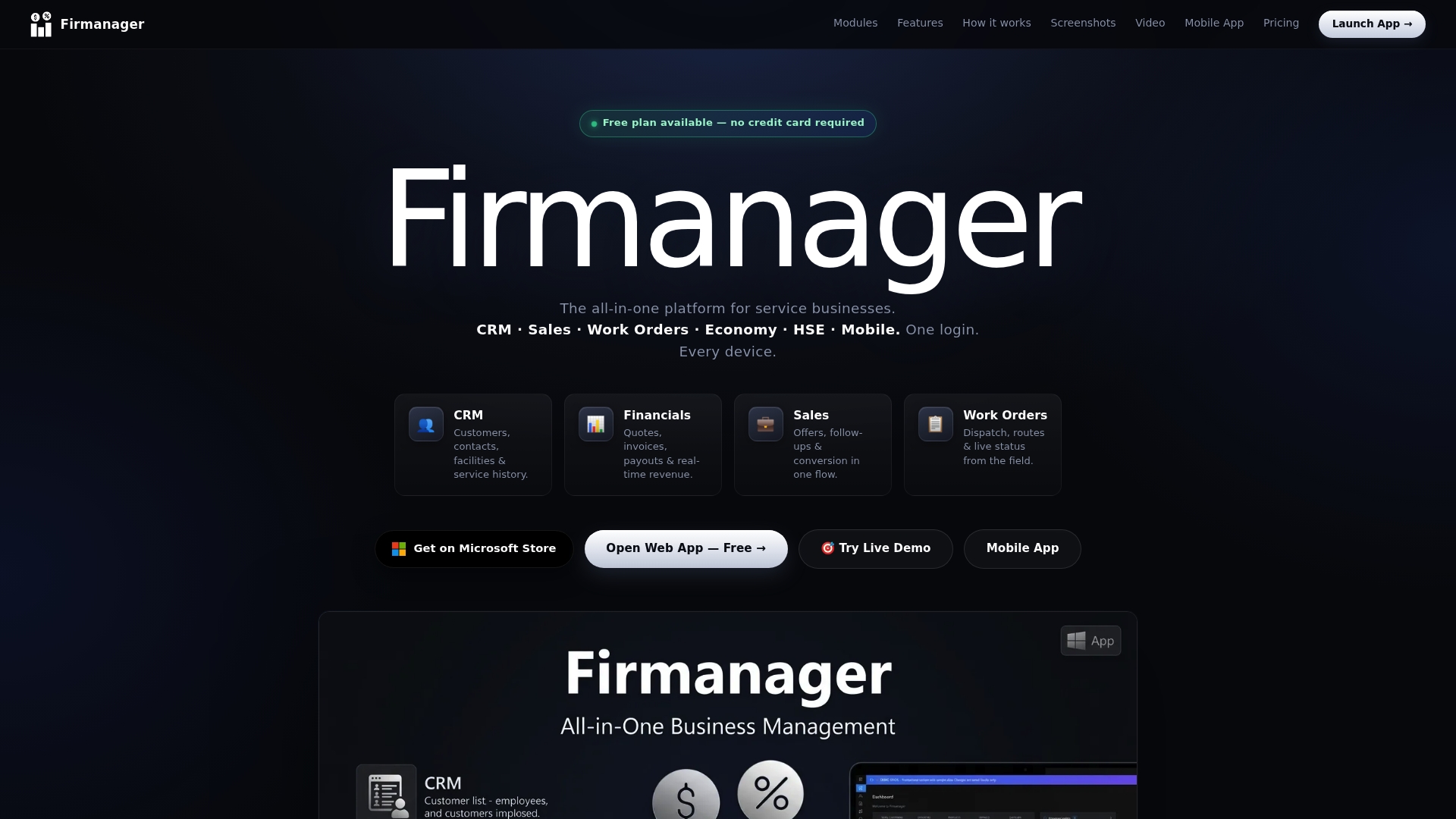
All modules are included in each paid plan, and a free plan is available for testing. Firmanager targets service businesses and combines CRM, finance, work order, and HSE tools. It runs on the web, a Windows desktop app, and a mobile PWA with cloud sync and real time notifications.
Core Features
Firmanager centralizes customer and contact management with a CRM and sales workflow that handles offers, follow ups, and lead tracking. The finance module creates quotes, invoices, and payouts while tracking revenue in real time and supporting payments through Stripe. Field service features include dispatch, checklists, task management with a recurring engine and Kanban view, route planning, and an employee self service portal for time logging, photo uploads, and leave requests.
Key Differentiator
Firmanager unifies operational, financial, and safety workflows in one platform, so teams avoid copying data between separate systems. The platform pairs field service dispatch and checklists with compliance tools for risk assessments and incident reports. Cloud synchronization and live dashboards deliver KPIs and notifications to office and field staff at once.
Pros
Firmanager delivers a single place to manage operations, billing, and compliance, which reduces time spent on manual data transfer. The presence of real time dashboards and notifications helps supervisors spot overdue work orders and revenue gaps quickly. Multi role access and mobile support keep field crews connected through a Windows app and a mobile PWA, while the free plan makes initial evaluation low cost. Built in support for payments and revenue tracking speeds invoice collection and closes the loop between service and finance.
Cons
- Limited enterprise customization options compared with large, specialist platforms
Notable Integrations
- Stripe for subscription and transaction payments. This integration lets you accept payments and reconcile receipts inside the finance module.
Who It's For
Small to medium service businesses with field teams that need one system for CRM, scheduling, invoicing, and safety tracking. Operations managers who dispatch crews and finance staff who generate invoices will both find relevant tools. Companies that require mobile access for technicians will benefit from the Windows app and PWA.
Unique Value Proposition
The employee self service portal paired with a finance module that issues quotes and invoices and accepts Stripe payments is the most concrete advantage. That combination shortens the billing cycle because field teams capture job evidence, and office teams issue invoices without chasing attachments. For firms that bill by job, this reduces administrative handoffs and speeds cash collection.
Real World Use Case
A regional maintenance company uses Firmanager to store client records, dispatch technicians, and track work orders on mobile devices. Technicians upload photos and incident reports on site, which appear immediately on the office dashboard. The company generates invoices from completed work orders and records payments through the integrated payment flow.
Pricing
Free to start. Paid plans begin at $19/month for Pro with up to 5 users and $49/month for Business with up to 25 users. All modules are included in each paid plan.
Website: https://firmanager.cloud
VelocityEHS Accelerate® Platform
At a Glance
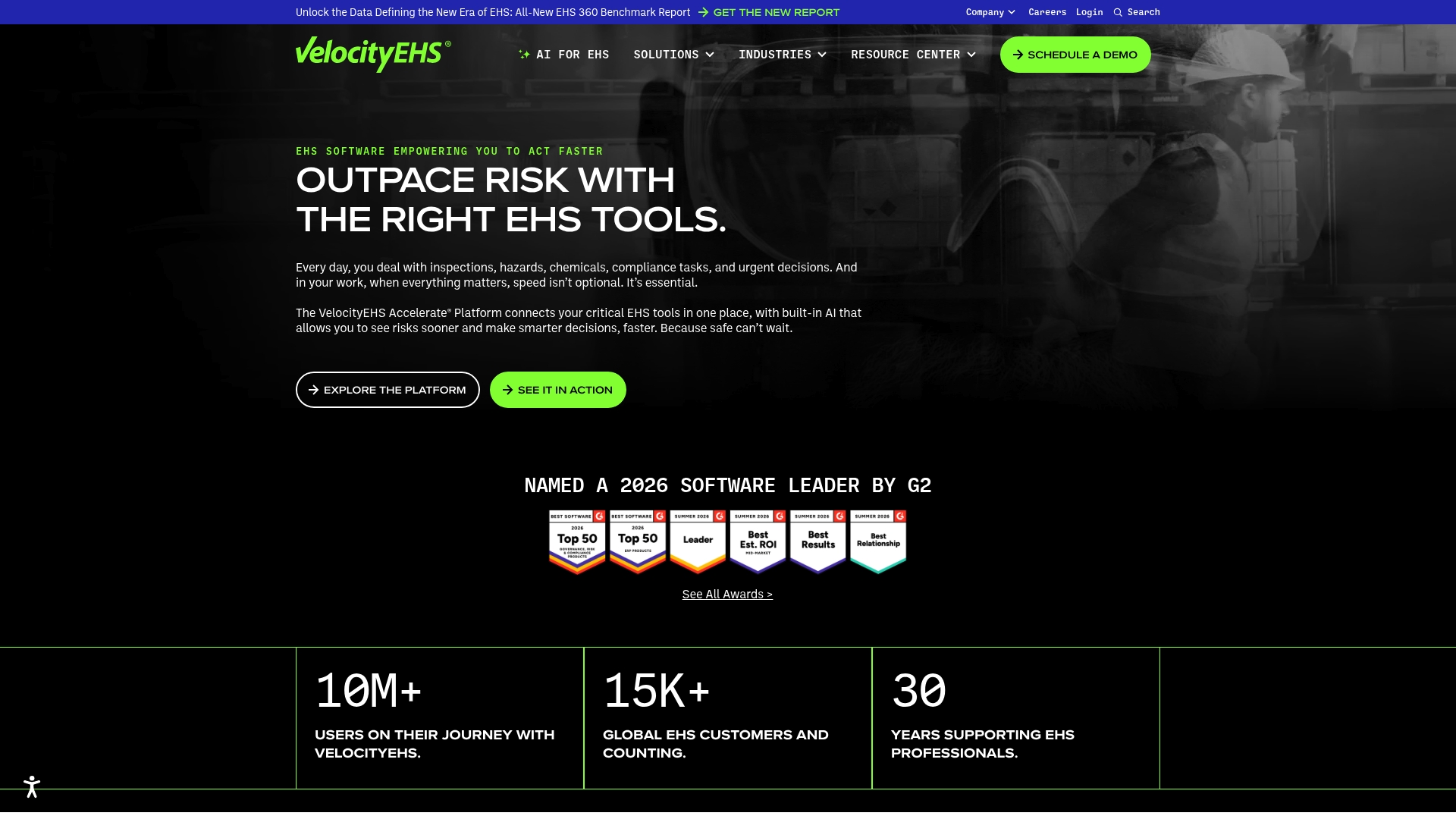
VelocityEHS reports more than 10 million users and 15,000+ global customers, and the vendor cites a 2026 G2 software leader recognition. This scale is notable for an environmental health and safety platform because it signals broad enterprise adoption. The claim comes from the company and appears across its marketing materials.
Core Features
VelocityEHS Accelerate collects safety, chemical management, ergonomics, and operational risk tools into a single, unified system and offers configurable dashboards and reports. The platform includes in-app training and configurable workflows to adapt processes to existing policies. It also delivers AI-driven risk analysis and early warnings to surface hazards before they escalate.
Key Differentiator
The platform ties AI capabilities directly into everyday EHS workflows so alerts and insights arrive inside the same interface teams use for reporting and corrective actions. That tight integration reduces context switching between analytics and case management. The approach favors organizations that want proactive detection built into incident and compliance workflows.
Pros
VelocityEHS reduces the need for separate point solutions by keeping incident reporting, chemical programs, and ergonomics assessments inside one product. The vendor highlights AI features that flag emerging risks, which helps investigators prioritize cases. Design choices favor fast user adoption, and the product is used by large firms such as Microsoft, Coca Cola, and Siemens according to the company.
Cons
-
Potential complexity for small teams. The platform’s breadth can overwhelm buyers with limited IT or EHS digital maturity.
-
Cost transparency is limited. Pricing is not public and appears to be negotiated at the enterprise level.
-
Implementation requires change management. Large configuration scopes mean longer rollout and training timelines for some organizations.
When It May Not Fit
Small operators with simple hazard reporting needs will likely find the feature set excessive and the procurement process burdensome. Teams without dedicated IT or EHS administrators may struggle to maintain custom workflows. Buyers on tight budgets should expect enterprise-level pricing conversations rather than off-the-shelf plans.
Who It's For
Large enterprises that need a scalable environmental health and safety platform and that plan to centralize multiple EHS programs in one product. Organizations that want proactive risk detection and have the resources for configuration and governance will get the most value. Companies with distributed operations and formal compliance obligations will benefit from the unified data model.
Real World Use Case
A multinational manufacturer implemented VelocityEHS Accelerate to merge hazard reporting, compliance tracking, and risk analysis. The company used built-in AI alerts to prioritize high-risk events and shortened investigation handoffs. The result was faster response and clearer visibility across sites, according to the vendor’s account of the deployment.
Pricing
Pricing is not specified and appears to be enterprise and quote based. Expect negotiated contracts that vary by modules, user count, and support levels. Prospective buyers should request a tailored proposal and clarify implementation and training fees.
Website: https://ehs.com
SafetyStratus
At a Glance
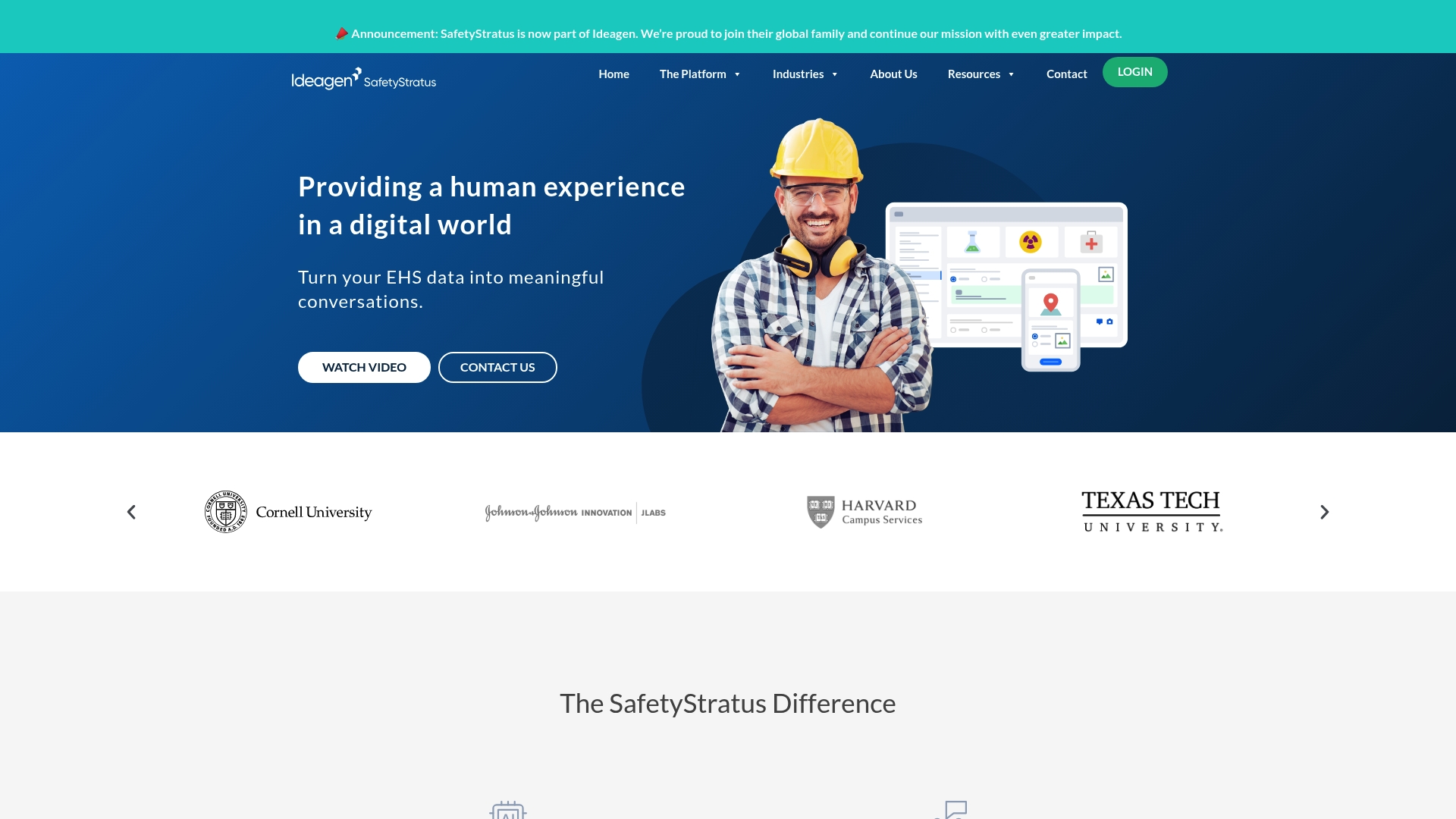
Harvard University built a university wide mobile inspection system using SafetyStratus to run campus inspections and engage staff and students in real time safety conversations. That implementation shows the platform can support large, distributed operations with mobile workflows. The case highlights practical use across higher education and research settings.
Core Features
SafetyStratus centralizes EHS tasks around asset management, biosafety protocol controls, and a dedicated chemical inventory module that tracks lab holdings. The platform also includes a compliance calendar for regulatory deadlines, and dashboards and analytics that visualize incident trends and inspection outcomes. The cloud based design lets teams access the same records across locations and devices.
Key Differentiator
SafetyStratus focuses on turning safety data into real time conversations rather than just archival records. The product pairs configurable modules with analytics so teams can surface issues and follow up with people quickly. That human centered approach aims to increase participation in safety programs while keeping regulatory tracking visible to managers.
Pros
The product offers an integrated set of EHS modules that keeps laboratory, clinical, and operational safety work in one place, which reduces manual handoffs. Its cloud based access supports multi campus or multi site deployments where field teams need up to date records on mobile devices. Customizable modules let safety teams tailor forms and workflows to industry specific needs and reporting practices.
Cons
- Public third party reviews are limited. That makes independent performance or satisfaction assessment harder.
- Pricing details are not published. Procurement teams must request custom quotes to compare total cost of ownership.
- No integrations are listed publicly. Organizations that depend on pre existing ERP or HR connectors will need to verify integration options with the vendor.
Who It's For
SafetyStratus fits large organizations and institutions with complex EHS needs, such as universities, healthcare systems, or manufacturers with multi site operations. It also suits research labs that require biosafety controls and chemical inventory tracking. Safety managers who need mobile inspection capabilities and centralized reporting will find the product aligned to their priorities.
Real World Use Case
At Harvard the platform supported a campus wide mobile inspection workflow that replaced disparate spreadsheets and paper checklists. Inspectors recorded findings on mobile devices and supervisors tracked corrective actions through the same dashboards. That setup improved visibility across departments and shortened the feedback loop between inspectors and facility teams.
Pricing
Pricing is not publicly listed. The vendor issues custom enterprise quotes based on module selection, number of sites, and deployment needs. Contact the vendor for a demo and a tailored pricing proposal.
Website: https://safetystratus.com
Ideagen Environmental, Health, and Safety Solutions
At a Glance
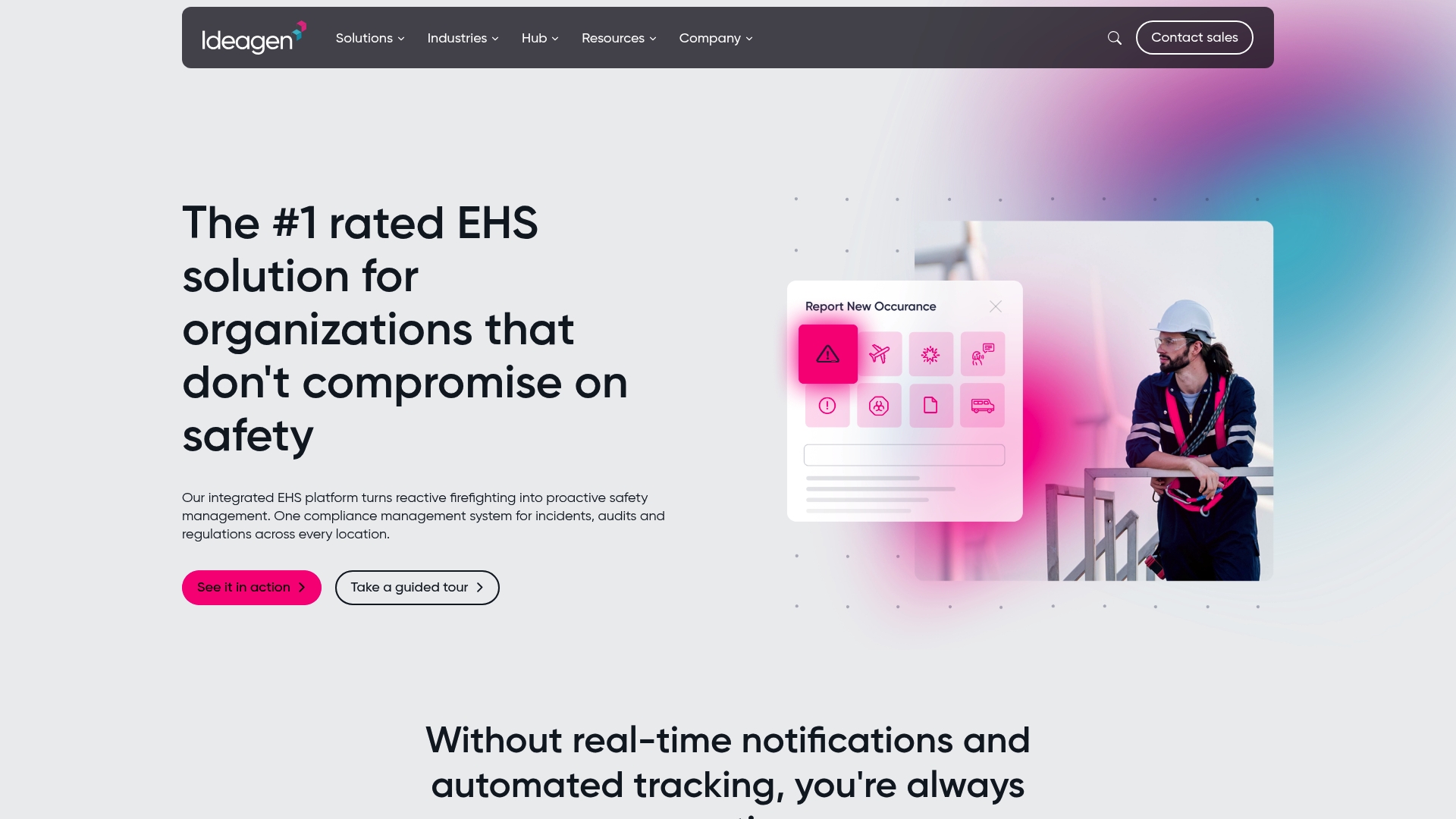
An aerospace company reports a 30% reduction in incidents after adopting Ideagen's EHS platform. The vendor advertises AI powered incident response, automated compliance mapping, and role based dashboards for regulated sectors. It connects to IoT sensors and enterprise systems for live monitoring and automated reports.
Core Features
Ideagen groups incident management, risk assessment, and compliance tracking into a single environment. The platform sends real time notifications, pulls data from IoT devices, and runs predictive analytics to flag emerging risks. Automated regulatory mapping and report templates shorten audit prep and cut manual paperwork.
Key Differentiator
The main advantage is the combination of AI powered incident response with compliance analytics that prioritize mitigation tasks. That pairing raises visibility into near term risks and focuses resources on the highest exposure areas.
Pros
Integration of safety, quality, and compliance workflows reduces duplicate records and aligns documentation across sites. According to the company, Ideagen reports strong customer satisfaction in regulated industries, which supports its enterprise focus. Live dashboards and automated reporting shorten the time between incident detection and corrective action.
Cons
- Complex deployments can demand extensive customization and significant IT involvement.
- The AI powered automations may feel restrictive if you require deep workflow customization.
- Public pricing details are scarce, so budgeting requires direct vendor conversations.
- Initial setup and training can involve substantial time and cost for large sites.
When It May Not Fit
Organizations with light regulatory needs or small safety teams will likely find this platform overbuilt. If you lack internal IT capacity, the customization and integration work increases implementation time. Buyers focused on low upfront cost should plan vendor conversations to confirm total fees and support terms.
Notable Integrations
- Regulatory databases for mapped compliance checks
- Enterprise resource planning systems for linked operational data
- IoT devices for real time monitoring and alerts
Who It's For
Safety managers, compliance officers, and risk teams in manufacturing, aerospace, utilities, and healthcare will get the most value. The product fits groups that need consolidated incident reporting, audit trails, and role based dashboards. It suits teams prepared to invest in implementation and ongoing change management.
Real World Use Case
An aerospace firm unified incident reporting, predictive analytics, and compliance documentation with Ideagen. The deployment tightened controls and improved audit preparation. That deployment produced the 30% incident reduction discussed above.
Pricing
Pricing is not publicly listed. The vendor customizes costs to organization size, scope, and integration complexity.
Website: https://ideagen.com/solutions/environmental-health-and-safety/ehs
Comparison of Alternatives
Choosing the right safety management software depends on balancing specific operational needs with feature sets. Firmanager.cloud distinguishes itself among these options through its streamlined integration for service-oriented tasks across multiple domains, while competitors demonstrate strengths in specialized scenarios that may appeal to larger or niche organizations.
Integration and Versatility
Firmanager.cloud offers exceptional versatility by unifying CRM, financial operations, field service functionalities, and compliance tracking in one accessible platform. Its employee self-service portal stands out, enabling direct uploads from field technicians which significantly reduce administrative overhead in invoicing and compliance tasks. Conversely, SafetyStratus excels in facilitating safety-focused dialogues and specialized module customization, making it valuable for targeted EHS applications in academic and research institutions.
Enterprise Focus and Advanced Analytics
VelocityEHS Accelerate outpaces in large-scale enterprise adoption, featuring AI-powered risk analysis and early warnings integrated into everyday EHS workflows. The platform efficiently caters to organizations with distributed operational teams, providing tools for compliance tracking and optimized risk management. Similarly, Ideagen’s EHS solutions shine in heavily regulated sectors, offering integration with IoT sensors for real-time monitoring and noteworthy incident reduction mechanisms.
Best Fit
- Small and medium-sized service businesses requiring one unified system for CRM, dispatch, financial tracking, and compliance would find Firmanager.cloud most suitable for their needs.
- Enterprises prioritizing AI-driven risk management and distributed operational facilities should consider VelocityEHS Accelerate.
- Academic institutions, healthcare systems, or laboratories needing biosafety controls and centralized inspections will benefit from SafetyStratus.
- Organizations in aerospace or manufacturing sectors will appreciate Ideagen’s advanced compliance mapping and IoT device integration.
Our Pick
For service-based operations needing to streamline task management, invoicing, and compliance in one accessible platform, Firmanager.cloud excels. The presence of the employee self-service portal combined with a finance module for quotes and payments via Stripe helps bridge the gap between field activities and back-office tasks, reducing processing times and administrative efforts. Larger organizations with more complex EHS demands or regulatory requirements might explore VelocityEHS Accelerate or Ideagen for specific capabilities that suit their needs.
This comparison highlights the integration and usability aspects of prominent safety and operational management software to assist decision-makers in evaluating the best solution for their businesses.
| Product | Best for | Key differentiator | Notable limitation | Pricing |
|---|---|---|---|---|
| Firmanager | Service businesses needing unified CRM, finance, and field tools | Combines operational and financial management in a single platform | Limited enterprise customization options | Free to $49/month |
| VelocityEHS | Large enterprises centralizing EHS programs | AI-driven risk detection integrated within compliance workflows | Potential complexity for small teams | Price not published |
| SafetyStratus | Educational institutions and large organizations tracking multi-site safety | Facilitates real-time safety discussions with centralized reporting | Limited public integrations information | Price not published |
| Ideagen EHS | Regulated industries requiring robust compliance and incident management | Pairing AI-powered risk response with compliance prioritization analytics | Complex deployments demand extensive IT customization | Price not published |
How Can Service Businesses Improve Safety and Operational Efficiency?
Many service businesses struggle with disconnected systems that slow communication and cause manual data transfers. Firmanager combines CRM, finance, work order management, and compliance tools in one platform to solve these challenges. This integration helps teams see live dashboards, receive real-time notifications, and manage safety workflows alongside billing and scheduling.
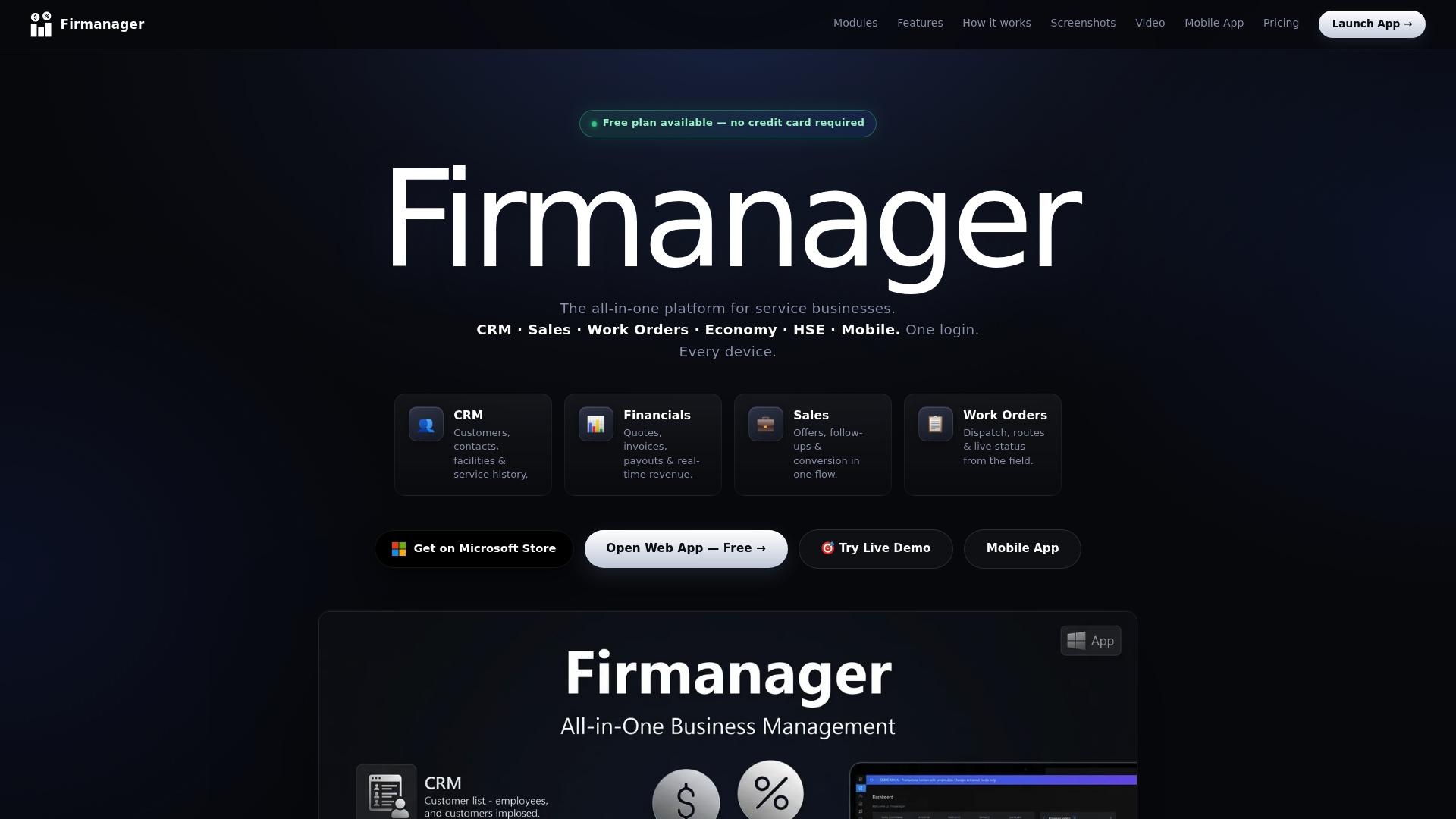
Explore how Firmanager supports operations managers and finance staff with features built for mobile and desktop use. Visit Firmanager to experience a platform that reduces errors and accelerates billing while enhancing compliance management. Get started now to import job data and track work orders with real-time insights.
FAQ
How does Firmanager support dispatch and task management for service businesses?
Firmanager excels in dispatch and task management with features like route planning and a recurring task engine. The platform also includes checklists and a Kanban view for better task visibility in the field. This helps operations managers efficiently allocate resources and monitor ongoing work.
What is the difference between Firmanager and VelocityEHS in terms of EHS features?
VelocityEHS stands out for its integration of AI-driven risk analysis, which helps to proactively surface hazards before they become issues. In contrast, Firmanager focuses on unifying operational, financial, and safety workflows, making it suitable for service businesses needing CRM and finance tools alongside safety compliance. Depending on your business need, either platform can offer significant benefits.
Can I use Firmanager if my company prioritizes compliance tracking?
Firmanager is effective for compliance tracking as it combines safety tools with operational management features. The platform's built-in compliance tools for risk assessments and incident reports provide a thorough tracking system for safety managers and operations teams. This integrated approach makes it a practical choice for firms with compliance requirements.
How does Firmanager help teams with invoicing and payment processing?
Firmanager streamlines invoice creation and payment processing through its finance module that supports Stripe payments. This integration allows service businesses to efficiently collect payments while maintaining a real-time revenue tracking system, which is beneficial for finance staff who need to generate invoices quickly.
What features differentiate Firmanager from other safety management software options?
Firmanager centralizes customer and contact management within its CRM, encompassing dispatch, finance, and compliance tools in one platform. This unification minimizes manual data entry and improves efficiency, making it an attractive option for service businesses that manage multiple operations under one roof.