9 Ready to Paste Customer Communication Templates for Service Teams

9 Ready to Paste Customer Communication Templates for Service Teams
These are copy-ready customer communication templates you can paste and use today to cut drafting time and keep messages professional. KaiosMedia built this library for service and client-facing businesses that need consistent tone across onboarding, scheduling, billing, and support. Personalization that references a customer’s specific issue predicts stronger customer satisfaction than a first name alone, and some platforms help teams keep templates synced across a growing team.
TL;DR:
- Personalization that references specific customer details significantly improves satisfaction but requires accurate, up-to-date CRM data.
- Automating templates with live CRM data and scheduling reminders across email and SMS reduces no-shows and speeds up billing.
- Templates should be overseen by a dedicated owner, reviewed regularly, and stored systematically with version control to prevent drift.
- Focusing on system hygiene, like cleaning CRM data before automation, is more impactful than perfecting template wording alone.
- Integrating templates into a centralized platform consolidates customer data, automates outreach, and streamlines team collaboration for scalability.
Table of Contents
- Top Templates to Use First
- Templates You Can Copy by Use Case
- How to Make Templates Sound Human, Not Robotic
- Email Etiquette Rules That Actually Move the Needle
- Keeping Templates Accurate as Your Team Grows
- What We See Working and Where Teams Get It Wrong
- Templates Are a Tool, Not a Strategy
- Managing Templates and Reminders Without the Manual Work
- Where This Guidance Comes From
- Sources
- FAQ
Top Templates to Use First
Start with the templates your business sends most often. Each one below solves a specific moment in the customer relationship, and each asks for exactly one action.
- Welcome or intro email: sent right after signup, subject “Welcome aboard, here’s what happens next,” action is confirming account details.
- Follow-up after first contact: sent 2-3 days after an inquiry, subject “Following up on your request,” action is scheduling a call.
- Progress update: sent mid-project, subject “Your project update: [milestone] complete,” action is reviewing attached work.
- Appointment confirmation: sent immediately after booking, subject “Confirmed: your appointment on [date],” action is adding it to their calendar.
- Appointment reminder: sent 24 hours before, subject “Reminder: appointment tomorrow at [time],” action is confirming or rescheduling.
- Cancellation notice: sent as soon as a change happens, subject “Update on your scheduled service,” action is picking a new time.
- Apology or issue resolution: sent within hours of a complaint, subject “We’re fixing this, here’s how,” action is confirming the resolution works.
- Invoice or billing notice: sent on the invoice date, subject “Invoice #[number] from [business name],” action is completing payment.
- Feedback request: sent after service completion, subject “How did we do?,” action is leaving a quick rating.
Templates You Can Copy by Use Case
Each template below is ready to paste. Replace bracketed placeholders, keep the tone matching your brand, and let your email client add your signature rather than typing one into the body.
Onboarding
- Subject: “Welcome to [Business Name], here’s your first step”
- Body: “Hi [First Name], thanks for signing up. Your account is active and ready. Your first step is [specific action, e.g., ‘scheduling your intake call’]. You can do that here: [link]. If anything looks off, reply to this email and we’ll sort it out.”
- Placeholders: [First Name], [Business Name], [specific action], [link].
- Timing: send within one hour of signup.
- Tone note: warm and direct, no filler.
Scheduling
- Subject: “Confirmed: your appointment on [Date] at [Time]”
- Body: “Hi [First Name], this confirms your appointment for [Service Type] on [Date] at [Time] at [Location]. Please reply if you need to reschedule. We’ll send a reminder 24 hours before.”
- Placeholders: [Date], [Time], [Service Type], [Location].
- Timing: send immediately after booking; a reminder version follows a day before.
- Tone note: brief and factual, one action only.
Support and issue resolution
- Subject: “We’re on it: [Issue Summary]”
- Body: “Hi [First Name], thanks for flagging [specific issue]. Here’s what we’re doing: [action taken]. Expect resolution by [timeframe]. We’ll follow up once it’s done.”
- Placeholders: [specific issue], [action taken], [timeframe].
- Timing: send within a few hours of the complaint, never next business day.
- Tone note: accountable, no excuses, no corporate hedging.
Billing and invoicing
- Subject: “Invoice #[Number] due [Due Date]”
- Body: “Hi [First Name], your invoice for [Service or Product] is attached. Amount due: [Amount], due by [Due Date]. Pay here: [Payment Link]. Questions on the charges? Just reply.”
- Placeholders: [Number], [Service or Product], [Amount], [Due Date], [Payment Link].
- Timing: send on the invoice date, with a reminder three days before the due date.
- Tone note: clean and neutral, no apology for asking to be paid.
Follow-up
- Subject: “Checking in on [Topic]”
- Body: “Hi [First Name], wanted to follow up on [specific topic or request]. Is there anything blocking a decision or next step? Happy to hop on a quick call if useful.”
- Placeholders: [specific topic or request].
- Timing: 3-5 business days after the last contact.
- Tone note: low-pressure, genuinely helpful.
Feedback request
- Subject: “Quick question about your recent service”
- Body: “Hi [First Name], we just wrapped up [Service Name]. How did it go? A one-line reply or a quick rating here [link] helps us improve.”
- Placeholders: [Service Name], [link].
- Timing: within 24 hours of service completion.
- Tone note: short, easy to answer in ten seconds.
Cancellation
- Subject: “Update needed: your [Date] appointment”
- Body: “Hi [First Name], we need to move your appointment originally set for [Original Date]. Available times: [Option 1], [Option 2]. Sorry for the shuffle, let us know what works.”
- Placeholders: [Original Date], [Option 1], [Option 2].
- Timing: as soon as the change is confirmed internally, never day-of if avoidable.
- Tone note: own the inconvenience without over-apologizing.
Apology after a mistake
- Subject: “Our mistake, here’s the fix”
- Body: “Hi [First Name], we got [specific error] wrong and that’s on us. Here’s what we’re doing to fix it: [correction]. We’ve also [added safeguard or credit if applicable].”
- Placeholders: [specific error], [correction], [added safeguard or credit if applicable].
- Timing: as soon as the mistake is identified, before the customer has to ask.
- Tone note: direct ownership, no passive voice around the error.
How to Make Templates Sound Human, Not Robotic
A template only works if it reads like it was written for one person. The fastest way to lose trust is a message that clearly went to everyone.
- Reference a specific detail: the service date, the product model, or the exact issue raised, not just a name.
- Use variables that carry real information: [Last Service Date], [Technician Name], [Order Number], not generic filler.
- Adjust tone by channel: SMS versions should be shorter and more direct than email versions of the same message.
- Test subject lines and opening lines against each other, then track which version gets opened and replied to more often.
- Track open rate and reply rate as your two core signals, since both point directly to whether the message landed.
- Skip a written sign-off in the template body and let your email client’s saved signature handle it, since a duplicated sign-off is a common tell that a message was automated.
Pro Tip: Keep a placeholder cheat sheet next to your templates so anyone on the team fills in the same fields the same way every time.
Personalization tied to a customer’s actual situation is a stronger driver of satisfaction than a name swap, according to customer satisfaction guidance, but it only works when the underlying data is accurate and current.
Email Etiquette Rules That Actually Move the Needle
Good etiquette is less about politeness and more about respecting the reader’s time. A few habits carry most of the weight.
- Clarity: one idea per email, one clear ask, no buried requests.
- Courtesy: acknowledge the reader’s time or situation before asking for anything.
- Correctness: double-check names, dates, and amounts before sending.
- Conciseness: cut any sentence that does not change what the reader does next.
- Completeness: include every detail the reader needs to act without a reply asking for more.
Subject-line formulas that work well: “[Action] needed: [Topic],” “Confirmed: [Detail],” and “Quick update on [Topic].” Response-time expectations matter as much as wording: a common internal SLA is same-business-day for support requests and within one hour for anything marked urgent. Personalization referencing a specific past interaction outperforms a first-name-only approach in driving customer satisfaction, which makes accurate CRM data worth the extra setup time.
Keeping Templates Accurate as Your Team Grows
Templates drift the moment more than one person edits them without a system. A few habits keep the library trustworthy.
- Name templates by function and date, like “Invoice-Reminder-v3-2026,” so anyone can find the current version fast.
- Assign one owner per template category who approves edits before they go live.
- Automate the repeatable ones, like appointment reminders and invoice notices, using tokenization so personalization survives at scale, while keeping apology and resolution emails manual since they need judgment.
- Review every template on a set cadence, commonly every 90 days, to catch outdated links, pricing, or policy references.
- Track simple metrics per template, open rate and reply rate at minimum, and retire anything underperforming for two review cycles running.
For appointment-heavy businesses, pairing email templates with SMS reminders and two-way texting closes the loop faster than email alone, especially for time-sensitive confirmations.
What We See Working and Where Teams Get It Wrong
The businesses getting the most from templates are the ones that treat them as living documents, not a one-time setup. Teams that pair reminder templates with SMS tend to report fewer no-shows, and teams that tighten billing language collect invoices faster.
The most common mistake is skipping CRM data hygiene before turning on personalization tokens. A broken token showing “Hi First Name]” undoes any trust the template was supposed to build, which is why a quick [CRM cleanup pass before automation matters more than the template wording itself.

Templates Are a Tool, Not a Strategy
The advice around customer communication usually treats templates as the whole solution. They are not. A well-written template sent from a messy CRM or an inconsistent process will still feel impersonal, no matter how many placeholders it has.

What actually moves outcomes is the system behind the template: clean data, a clear owner, and a review habit that catches drift before customers notice it. Most businesses skip that part and wonder why open rates fall after the first few months.
If you take one thing from this library, prioritize the data checks before the copywriting. A polished apology email means little if it goes out with a broken merge field or references a service date that is a week off. Fix the plumbing first, then let the templates do their job.
— KaiosMedia
Managing Templates and Reminders Without the Manual Work
Running a growing service business on scattered templates in different inboxes gets messy fast, and that is exactly the gap some platforms centralize CRM, invoicing, and field service management under one login, keeping customer data current across devices instead of scattered in different spreadsheets.
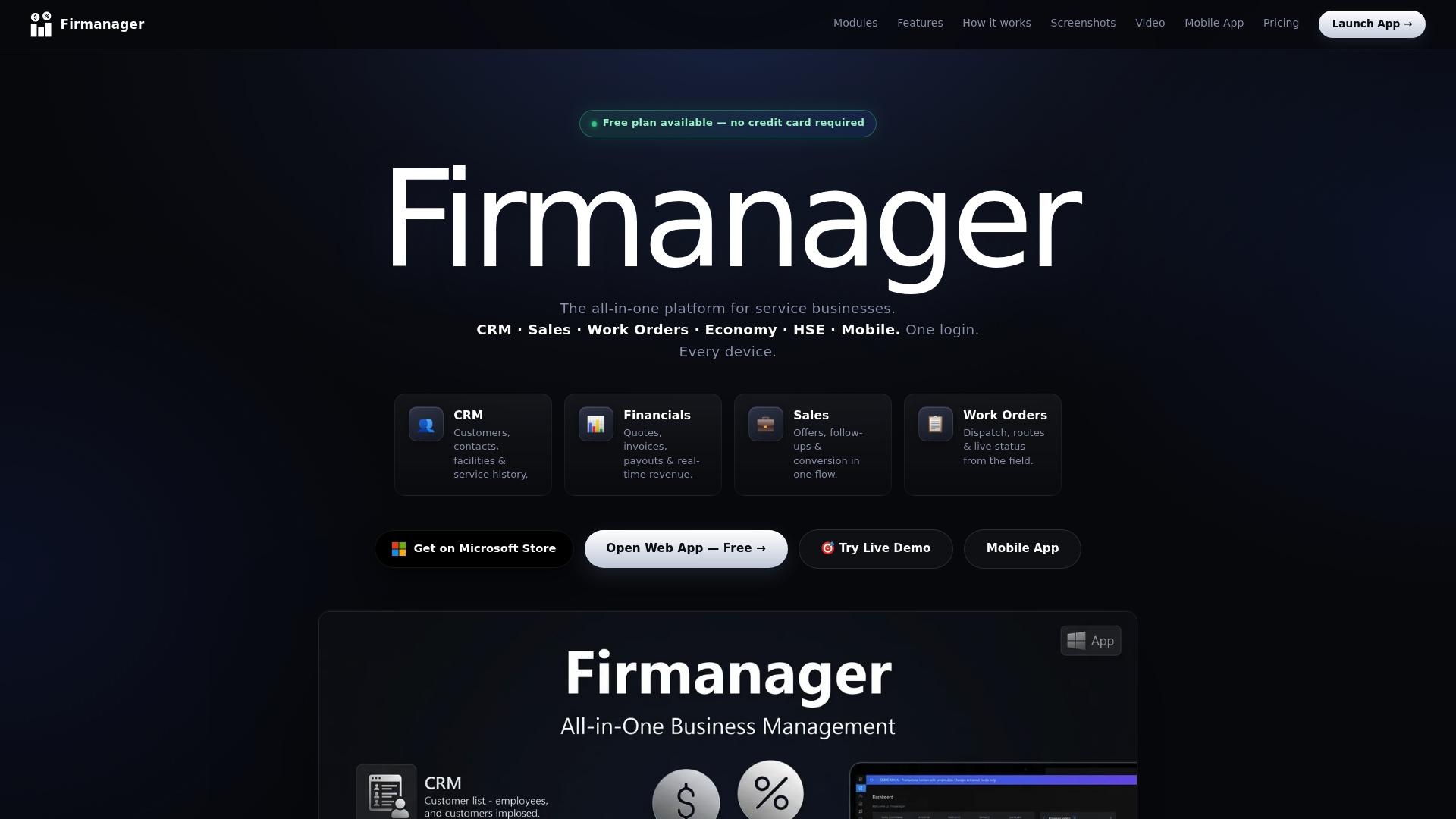
- Store templates alongside customer records so personalization tokens pull from live CRM data, not stale exports.
- Schedule appointment and invoice reminders once and let them send automatically across email and SMS.
- Keep invoicing tied to Stripe, so billing templates connect directly to real payment status.
- Access everything from one login across devices, so field staff and office staff see the same customer history.
If your current setup means retyping details across five tools, check the plans on Firmanager and see whether the Free, Pro, or Business tier fits your team size.
Where This Guidance Comes From
Personalization and satisfaction guidance draws on customer satisfaction research. Template governance practices reference 90-day template management and customer support automation partner guides, alongside internal notes on SMS reminders and CRM cleanup.
FAQ
What are the 5 C’s of email etiquette?
The 5 C’s are clarity, courtesy, correctness, conciseness, and completeness, each aimed at making an email easy to act on. Applying them means one clear ask per email, verified details, and no missing information that forces a reply just to clarify.
What are some good customer service email templates?
Strong customer service templates cover appointment confirmations, apology and issue resolution, invoice reminders, and feedback requests, each built around one specific action. The templates in this guide are copy-ready and organized by use case so you can paste and personalize them directly.
What are the 7 steps of customer service?
Definitions vary across sources, but a common version includes greeting the customer, listening to the issue, acknowledging it, offering a solution, confirming resolution, following up, and requesting feedback. Templates support several of these steps directly, particularly acknowledgment, resolution, and follow-up.
What are the three types of templates?
Communication templates generally fall into three categories: transactional (confirmations, invoices), relational (follow-ups, feedback requests), and recovery (apologies, issue resolution). Each type serves a different moment in the customer relationship and benefits from a distinct tone.
How much does Firmanager cost?
Firmanager offers a Free plan, a Pro plan at $19 per month, and a Business plan at $49 per month, all listed on the Firmanager site. Pricing depends on team size and the features your business needs.
Recommended
Run your whole business in one place
CRM, quotes, work orders, invoicing, expenses, HR and HSE — one login, every device. Free-forever plan.
Start free →