6 Steps U.S. Employers Must Take for Employee GPS Tracking Laws

6 Steps U.S. Employers Must Take for Employee GPS Tracking Laws
Employers can generally track company-owned vehicles and devices, but a patchwork of state statutes and labor-law exposure means “legal” depends heavily on where employees work and who owns the equipment. Before turning on any tracking feature, confirm ownership of the device, check whether the state requires written notice, and restrict data collection to working hours. Those three steps resolve most of the risk employers face today.
TL;DR:
- Most states require advance notice before electronic monitoring, with Maine adding annual acknowledgment requirements starting in 2026.
- Tracking company-owned vehicles and devices generally carries lower legal risk, especially when paired with clear policies and owner consent.
- Tracking personal vehicles or devices without explicit employee consent significantly increases legal exposure, especially outside scheduled work hours.
- Automating location collection during work hours only, using geofencing and data purges, helps minimize privacy claims and legal risks.
- Multi-state employers should regularly review and update policies to comply with evolving state laws and federal labor and privacy protections.
Table of Contents
- Federal baseline: what ECPA actually covers
- State-by-state rules: notice states vs. tracking-device statutes
- Ownership and consent: company vehicles vs. personal vehicles
- Keeping tracking inside work hours
- Building a compliant GPS tracking policy step by step
- NLRB risk: Section 7 and surveillance of protected activity
- What’s changing in 2026 for multi-state employers
- Compliance checklist: what to do this week
- Balancing operational value with privacy compliance
- Turning policy into practice with Firmanager
- FAQ
- Sources
Federal baseline: what ECPA actually covers
No single federal law governs private-employer GPS tracking the way many managers assume. The Electronic Communications Privacy Act (ECPA) regulates interception of electronic communications, and it carries an “ordinary course of business” exception that courts have used to let employers monitor company equipment used for work. ECPA was written for phone and data interception, not satellite location tracking, so its protection for employers is real but narrower than most handbooks imply.
Fourth Amendment case law adds useful context but doesn’t apply directly to private employers. In United States v. Jones, the Supreme Court held that law enforcement’s warrantless attachment of a GPS device to a suspect’s vehicle was a search requiring a warrant. That ruling binds government actors, not private businesses, but it shaped how state legislatures think about tracking devices generally.
The absence of a dedicated federal GPS statute means state law, not federal law, decides most of what employers can and cannot do.
Because federal law leaves this gap, state criminal tracking statutes, state electronic-monitoring notice laws, and common-law privacy claims carry most of the weight. An employer operating in Connecticut, California, and New Jersey can face three entirely different compliance obligations for the same tracking program, which is why a one-size-fits-all policy rarely survives scrutiny.
State-by-state rules: notice states vs. tracking-device statutes
Employers should sort states into three practical buckets rather than trying to memorize fifty separate codes. The classification below reflects how each state’s law actually constrains a GPS program.
- Electronic-monitoring notice states: require advance notice before monitoring employees, regardless of the specific technology.
- Vehicle or device tracking-device statutes: criminalize installing a tracking device without consent, typically with an owner-consent carve-out.
- Federal-baseline states: no dedicated state statute beyond general privacy and tort principles, so ECPA and common law set the floor.
Connecticut, Delaware, and New York already require employers to give notice before electronic monitoring begins, and Maine joins that group with provisions taking effect in 2026 that add prior notice and, in some circumstances, annual acknowledgment requirements. New Jersey stands apart with a statute built specifically around vehicle tracking: it requires prior written notice before using a tracking device in an employee’s vehicle, and violations carry civil penalties enforced by the state’s Labor Commissioner. That statute is narrower than many employers assume: it targets single-purpose tracking devices, so multi-function telematics systems may sit outside its “sole purpose” language, though that distinction hasn’t been tested broadly.
California, Texas, Illinois, and Florida fall into the second bucket. California’s Penal Code Section 637.7 makes it a misdemeanor to use an electronic tracking device to determine someone’s location without consent, but it includes an owner-consent exception that typically protects employers tracking vehicles they own. Illinois, Texas, and Florida carry comparable tracking-device provisions with their own consent mechanics, so the exact wording matters when a business operates fleets across state lines.
| State | Category | Core requirement |
|---|---|---|
| Connecticut | Notice state | Advance notice of electronic monitoring |
| Delaware | Notice state | Advance notice of electronic monitoring |
| New York | Notice state | Advance notice of electronic monitoring |
| Maine | Notice state (effective 2026) | Prior notice, annual acknowledgment in some cases |
| New Jersey | Vehicle-tracking notice statute | Prior written notice before installing a tracking device |
| California | Tracking-device statute | Owner-consent exception under Penal Code 637.7 |
This table reflects statute categories reported in state code and practitioner compilations, cross-checked against the primary statutory text linked above and the legislative reference maintained for Connecticut’s chapter on electronic monitoring. Texas, Illinois, and Florida follow similar owner-consent logic but weren’t included in the table because their statutory language varies enough that quoting a single requirement would oversimplify it.
Ownership and consent: company vehicles vs. personal vehicles
Who owns the vehicle or device changes the legal analysis more than any other factor. Most state tracking-device statutes exempt owners from liability for tracking their own property, which is why GPS on a company truck is a different legal question than GPS on an employee’s personal car.
- Company-owned vehicles and devices generally fall under the owner-consent exception in states like California, so tracking them carries lower legal risk when paired with a clear policy.
- Employee-owned vehicles used for work sit in riskier territory, since the owner-consent exception typically protects the vehicle’s actual owner, not the employer.
- Personal phones with work apps raise similar issues: tracking a personal device without explicit, documented consent increases exposure under both state tracking statutes and common-law privacy claims.
In practice, tracking a personal vehicle without the employee’s informed, signed consent is likely unlawful or at minimum high-risk in states like California and Texas, where tracking-device statutes focus on the vehicle’s ownership rather than its use. For mixed fleets where staff alternate between company trucks and their own cars, the safer route is avoiding device installation on personal vehicles altogether and instead using a work-only mobile app that collects location only during logged shifts, with signed consent on file where state law suggests more documentation is warranted.
Keeping tracking inside work hours
After-hours and off-duty tracking is where most legal exposure concentrates, because several state statutes and common-law privacy claims specifically target covert or continuous monitoring rather than work-hour tracking. A device that keeps reporting location at 9 p.m. on a Saturday looks a lot more like surveillance than fleet management, and that distinction matters in court.
- Time-windowed tracking limits data collection to scheduled shifts, closing the gap that triggers off-duty privacy claims.
- Geofencing can restrict alerts to job sites, reducing the volume of location data collected outside work contexts.
- Automatic data purges remove location history after a set retention period, limiting what’s available if a dispute arises.
- Access logs record who viewed tracking data and when, which supports a legitimate-business-purpose defense.
Pro Tip: Configure tracking apps to auto-disable location collection the moment an employee clocks out, rather than relying on managers to toggle it manually.
Policy controls matter as much as the technology. Limiting who can view tracking data, documenting the business purpose for each use, and capping disciplinary action to verified, work-hours data all reduce the odds that a tracking program gets challenged as overbroad.

Building a compliant GPS tracking policy step by step
A written policy is the single most effective tool for reducing legal exposure, but it has to include specific elements rather than a vague mention of “company monitoring.”
- Define scope: specify which vehicles, devices, and roles are subject to tracking.
- State the purpose: safety, dispatch efficiency, theft prevention, or compliance, written in plain terms.
- Set retention limits: state how long location data is stored and when it’s deleted.
- Name who has access: list roles permitted to view tracking data and why.
- Spell out consequences: describe how tracking data may or may not be used in discipline.
- Collect acknowledgment where required: in notice states, get a signed or logged acknowledgment rather than relying on a handbook reference alone.
Sample notice language can be as direct as: “This vehicle is equipped with GPS tracking technology used for dispatch, safety, and route optimization. Location data is collected only during scheduled work hours and retained for 90 days.” Pairing that notice with an employee self-service portal makes it far easier to deliver, log, and store signed acknowledgments at scale rather than chasing paper forms.
- Inventory every vehicle and device currently tracked and confirm ownership.
- Route the draft policy through legal review before rollout, especially for multi-state operations.
- Configure tracking software to match the policy’s stated hours and purpose.
Pro Tip: Train supervisors on what tracking data can and cannot justify in a disciplinary conversation. Most enforcement risk comes from how data gets used, not from the tracking itself.
NLRB risk: Section 7 and surveillance of protected activity
State compliance isn’t the only risk. The National Labor Relations Board has signaled that electronic monitoring can cross into unfair-labor-practice territory even when it’s otherwise legal under state tracking statutes.
Intrusive or opaque electronic surveillance can interfere with employees’ Section 7 rights, and employers may need to disclose or bargain over monitoring practices that affect protected activity.
The NLRB General Counsel’s memo on electronic surveillance urged vigorous enforcement against intrusive employer monitoring, warning that tracking used to surveil union organizing, concerted complaints about working conditions, or similar protected activity can trigger bargaining duties or 8(a)(1) violations regardless of what any state statute allows. Employers reduce this risk by keeping tracking narrowly tied to documented business needs like dispatch and safety, and by never using location data to identify who attended a meeting or communicated with coworkers about workplace conditions.
What’s changing in 2026 for multi-state employers
Several notice requirements take effect or expand in 2026, and employers operating across state lines need to update policies accordingly rather than assuming last year’s handbook language still holds.
- Maine’s workplace electronic-monitoring notice provisions become effective in 2026, adding prior notice and annual acknowledgment requirements in certain circumstances.
- New Jersey’s vehicle-tracking notice statute continues to draw practitioner attention because of its civil penalties and its narrower “sole purpose” device language.
- The NLRB has kept electronic surveillance a visible enforcement priority, which means multi-state employers should expect scrutiny from both state regulators and federal labor authorities simultaneously.
For businesses with teams in more than one state, this means auditing policies state by state rather than applying a single national template.
Compliance checklist: what to do this week
- Inventory every tracked vehicle and device, noting who owns each one.
- Flag employees working in notice states (Connecticut, Delaware, New York, New Jersey, Maine) for separate handling.
- Update the handbook with scope, purpose, retention, and access language, and collect signed acknowledgments where required.
- Configure tracking software for work-hours-only collection and automatic data purges.
- Train supervisors on appropriate use of tracking data in performance conversations.
- Schedule a legal review before expanding tracking to new states or device types.
Balancing operational value with privacy compliance
GPS tracking earns its place in field operations through safety, dispatch accuracy, and theft prevention, not through blanket surveillance. The programs that hold up legally and keep employee trust intact share a pattern: narrow purpose, documented policy, and technical limits that match what the policy promises. Transparency isn’t just a legal safeguard. It’s also what keeps a tracking program from feeling like something employees have to work around. Platforms built for field service operations make those narrow controls easier to configure and document consistently.
— KaiosMedia
Turning policy into practice with Firmanager
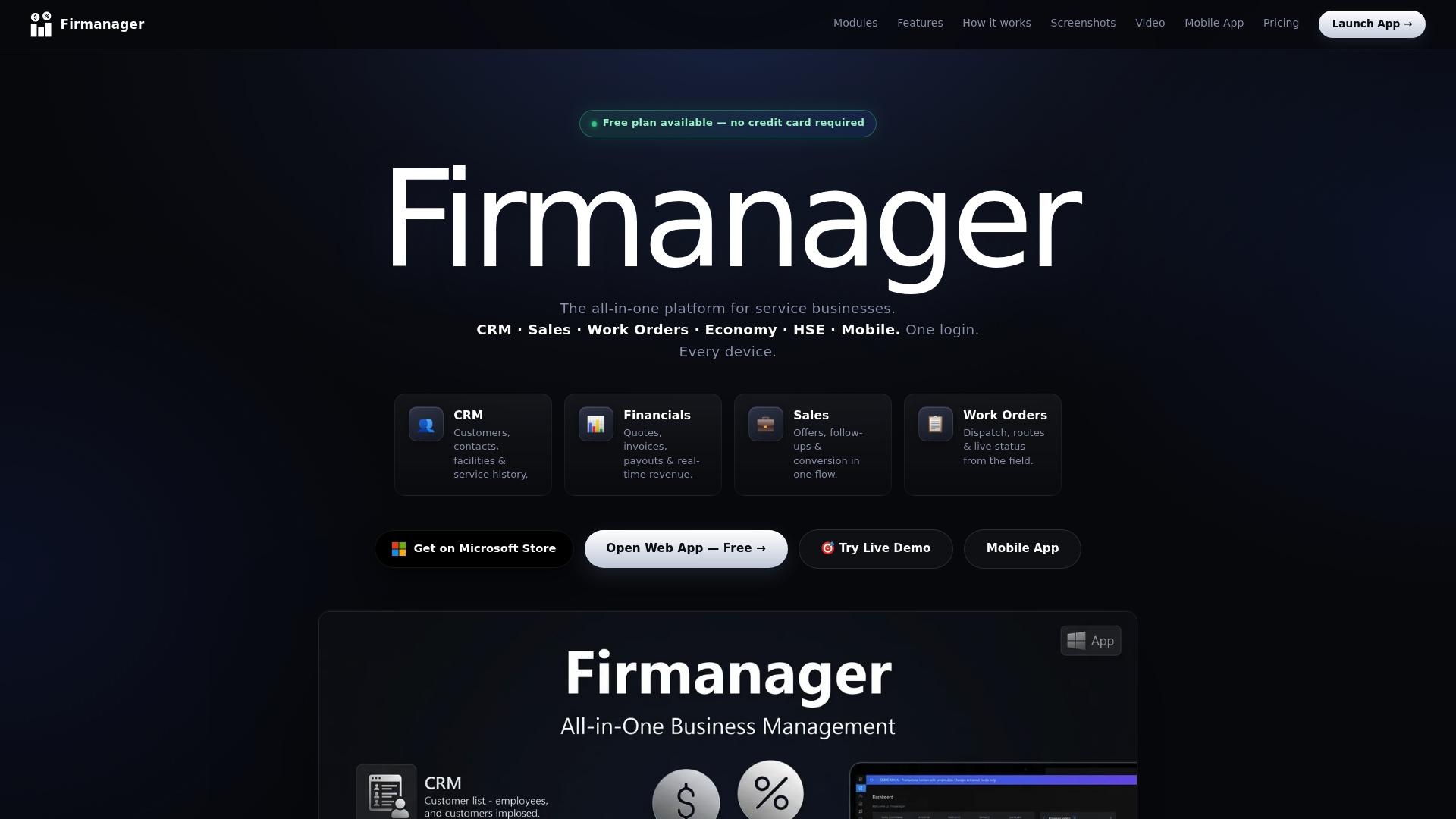
Writing a compliant policy is one task. Enforcing it consistently across every vehicle, shift, and device is another, and that’s where Firmanager fits into the picture. Our platform’s route and dispatch management ties location data to actual job assignments, so tracking has a documented business purpose baked into every record rather than a vague justification after the fact.
- Route and dispatch tools link tracking to specific jobs, supporting the legitimate-business-purpose standard regulators look for.
- Time-tracking windows help limit GPS collection to scheduled shifts rather than around the clock.
- Document handling and audit logs store signed acknowledgments and access records in one place instead of scattered paperwork.
- Configurable retention settings let managers match data storage to what their state’s notice statute actually requires.
For businesses weighing dedicated telematics hardware, fleet telematics devices handle vehicle-level tracking well, while Firmanager focuses on tying that location data to dispatch, compliance records, and workforce management in one login. We offer a Free plan, a Pro plan at $19 per month, and a Business plan at $49 per month, all available at Firmanager. Start with the Free tier to see how dispatch and documentation work together before committing to a paid plan.
This article is general information, not a substitute for advice from a qualified lawyer. Consult a qualified legal professional about your own circumstances before acting on anything here.
FAQ
Is it legal for an employer to track an employee using GPS?
Tracking is generally legal on company-owned vehicles and devices under most state laws, thanks to owner-consent exceptions in statutes like California’s Penal Code 637.7. Several states, including New Jersey, require prior written notice before tracking begins, so legality depends on both ownership and the specific state’s notice rules.
Can I refuse to be tracked at work?
Employees generally cannot refuse tracking of company-owned vehicles or devices used for work, since employers typically have a legitimate business purpose and legal standing to monitor their own property. Refusal rights are stronger regarding personal vehicles or personal devices, where tracking without consent raises much greater legal exposure for the employer.
Can my employer track my location without my consent?
On company-owned equipment, many states allow it without separate employee consent because the owner-consent exception applies to the employer as the property owner. On personal vehicles or devices, tracking without consent is far riskier and, in states with tracking-device statutes, can expose the employer to civil or criminal liability.
Does my employer have the right to track my location?
Employers generally have the right to track vehicles and devices they own, provided they comply with any applicable notice requirements in states like New Jersey, Connecticut, or Maine. That right narrows considerably for personal property and for tracking outside scheduled work hours, where privacy claims and NLRB scrutiny both increase.
Sources
- NLRB General Counsel memo on electronic surveillance
- New Jersey vehicle-tracking notice requirement (Ogletree analysis)
- California Penal Code §637.7
Recommended
Run your whole business in one place
CRM, quotes, work orders, invoicing, expenses, HR and HSE — one login, every device. Free-forever plan.
Start free →