Fix Double Booking Fast for Service Ops With Settings and DB Locks

Fix Double Booking Fast for Service Ops With Settings and DB Locks
Prevent double booking by centralizing your scheduling into one calendar source, syncing it both ways with every calendar your team touches, and enforcing buffers plus resource checks on every service that needs a room, vehicle, or piece of equipment. Add confirmations and holds for your riskiest time slots. If you build or run a booking platform yourself, back all of that with database-level safeguards so two requests can never both win the same slot.
TL;DR:
- Centralizing all scheduling into one calendar with two-way sync and resource checks prevents most double bookings caused by manual entry or unsynced calendars.
- Implementing database-level exclusion constraints, such as PostgreSQL’s exclusion range, effectively blocks overlapping confirmed bookings at the system level.
- Protocols like adding buffer times, limiting daily appointments, and requiring resource-specific booking ensure operational buffers that reduce overlapping schedules.
- Handling double bookings involves quick notification, root cause correction, and policy updates, with automation tools like Firmanager streamlining real-time resource management.
- Proper configuration of Google Calendar and Microsoft Bookings, including resource calendars and conflict-aware settings, plays a crucial role in avoiding preventable scheduling conflicts.
Table of Contents
- What Causes Double Booking in the First Place?
- Quick Checklist to Stop Double Bookings Now
- How Do You Configure Google Calendar and Microsoft Bookings to Avoid Conflicts?
- Why Booking Systems Still Double Book Under Load
- What Should You Do If a Double Booking Already Happened?
- How Firmanager Helps Service Businesses Avoid Scheduling Conflicts
- Treat Conflict Checks as a Rule, Not a Setting
- Try Firmanager: Get Started Free or Book a Demo
- Sources
- FAQ
What Causes Double Booking in the First Place?
Double booking happens when two appointments claim the same person, room, or piece of equipment at overlapping times. It shows up in three main forms: a direct overlap on one calendar, a resource collision where two staff members both reserve the same conference room or van, and a travel-time shortage where back-to-back jobs look fine on paper but leave zero minutes to actually drive between them.
Most conflicts trace back to a handful of familiar causes:
- Staff keeping appointments on personal calendars that never sync with the business system
- Manual scheduling and phone bookings that get typed in after the online calendar already shows the slot as open
- Services configured without a required resource, so the system never checks if the room or truck is free
- A technical race condition, where two booking requests hit “available” at the same instant and both get confirmed before either write finishes
The business cost is real: a missed appointment or a scrambled reschedule burns staff time and damages trust with the client standing in your lobby. Conflict detection systems that flag overlaps automatically, rather than relying on a human to catch them, close most of that gap before it ever reaches a customer.
Quick Checklist to Stop Double Bookings Now
You don’t need new software to cut most double bookings this week. Work through this list in order, and fix the earliest weak point you find.
- Centralize the calendar. Pick one booking page or unified calendar view as the single source of truth, and retire every side calendar staff might still be updating manually.
- Turn on two-way sync. Every calendar a staff member actually uses, personal or professional, needs to sync in both directions so a block on one shows up everywhere.
- Set buffer times. Add padding before and after appointments so setup, cleanup, and travel don’t quietly eat into the next booking.
- Cap daily bookings. Limit how many appointments a person or resource can take per day, especially during your busiest windows.
- Require resources on services that need them. Rooms, vehicles, and equipment should be tied directly to the service, not assumed to be free.
- Block time off and keep it current. Vacation, sick days, and training sessions need to hit the calendar the moment they’re approved, not the week after.
- Automate confirmations and reminders. A confirmed booking with a reminder reduces last-minute changes that create scramble-and-overlap situations.
- Use holds for high-risk slots. Peak hours, popular technicians, or single shared rooms deserve a short hold window instead of an instant, unreviewed confirmation.
- Train staff and audit calendar permissions regularly. Someone with edit access who doesn’t understand the booking rules is your most common source of avoidable conflicts.
Pro Tip: Run a monthly fifteen-minute audit of who has edit rights on your shared calendars. Staff turnover leaves behind stale permissions more often than any other single cause of surprise conflicts.
How Do You Configure Google Calendar and Microsoft Bookings to Avoid Conflicts?
Settings matter more than willpower here. Most double bookings happen because a default was left on “loose” rather than “strict.”
In Google Calendar, set up resource calendars for any room or piece of shared equipment rather than booking them through a person’s personal calendar. Resource calendars show a clean busy/free status to everyone, and sharing settings control who can actually add an event to them. Event visibility matters too: if a staff member marks personal appointments as “free” instead of “busy,” Bookings and other tools will happily stack something on top of it.
Microsoft Bookings gives you more granular control, and it’s worth using all of it. Buffer time is configured on the service details page and gets added to the total blocked duration, so a 60-minute appointment with a 15-minute buffer actually reserves 75 minutes on the calendar. Enable “events on the office calendar affect availability” so a staff member’s existing meetings actually block new bookings instead of being ignored. For shared spaces, set the room mailbox to auto-accept with conflicts disallowed, and mark that room as a required resource on every relevant service. Avoid the “any staff” option unless you’ve confirmed the resource check still fires. If your booking page lets a customer pick “any staff” for a service that needs one shared room, create separate services pairing each staff member with the room as a required resource, so the system treats that room as taken the moment anyone books it.

For general scheduling apps, three habits do most of the work: two-way calendar sync, daily booking caps, and automatic accept or decline logic for any resource-based service. Modern scheduling platforms check connected calendars in real time and lean on buffers and caps rather than manual review to keep things clean.
For higher-stakes slots, add manual approval or a deposit hold. A small deposit filters out no-shows and gives you a short review window before the slot locks for good.
Why Booking Systems Still Double Book Under Load
Most double bookings that happen despite “correct” settings come from a race condition, not a configuration mistake. A system checks whether a slot is free, gets a “yes,” and then inserts the booking. If two requests run that check within milliseconds of each other, both can see “available” and both can write a confirmed booking before either finishes. No setting toggle fixes that. It has to be fixed at the database layer.
| Defense | What it solves | Where it lives |
|---|---|---|
| Exclusion constraint (tstzrange + EXCLUDE USING gist) | Blocks two overlapping confirmed bookings from ever both inserting | Database schema |
| Transaction with re-check | Forces the availability check and the write to happen as one atomic step | Application/database layer |
| Idempotency key | Stops the same client’s retried request from creating a duplicate | API layer |
| Bucket-row atomicity | Handles high-concurrency time-span bookings when the store lacks native span locking | Application layer |
PostgreSQL’s exclusion constraints are the cleanest fix: define the booking’s time range with tstzrange, add an EXCLUDE USING gist constraint with the btree_gist extension, and the database itself rejects the second overlapping insert, no matter how close together the requests arrive. Use half-open intervals so back-to-back bookings can share a boundary without triggering a false conflict. Alternatively, wrapping the availability check and the insert inside a single transaction with a row lock accomplishes the same goal for teams not ready to add an exclusion constraint.
Idempotency keys and exclusion constraints solve different problems, so you often need both: one stops a client’s retry from duplicating itself, the other arbitrates real contention between two separate users. When contention does hit, surface a plain “this slot is no longer available” message instead of a raw database error, and offer the next open slot automatically.

Pro Tip: If you’re building your own booking flow, treat any database error as an opportunity, not just a failure. A well-designed 409 response that immediately suggests the next available slot turns a lost booking into a saved one.
What Should You Do If a Double Booking Already Happened?
Speed and honesty matter more than perfection once a conflict slips through. Work the incident in this order:
- Identify everyone affected before you contact anyone, so you’re not making a second mistake while fixing the first.
- Notify and apologize promptly, and offer a specific reschedule window rather than a vague “we’ll be in touch.”
- Triage the operational side: reassign a technician, offer overtime, swap staff, or put a temporary hold on the slot while you sort out who actually gets it.
- Find the root cause, manual error or a technical gap, and fix the setting or the code that let it happen, not just the individual booking.
- Update policy, whether that means adding a hold step, requiring manual approval on a specific service, or retraining staff on the calendar rules.
How Firmanager Helps Service Businesses Avoid Scheduling Conflicts
Firmanager builds the checklist above directly into how you run your business. Scheduling, dispatch, and resource assignment share the same real-time data across every device your team uses, so a technician’s calendar, the required equipment, and the customer’s confirmation all update together instead of on separate systems.
- Real-time scheduling that reflects staff availability the moment it changes, not after a manual sync
- Route and dispatch management that factors travel time into every assignment, cutting travel time by roughly 10% for teams that use it
- Automated SMS and email reminders that have cut no-shows by 30 to 40% for businesses running them consistently
- Required-resource handling for jobs tied to specific equipment or vehicles, so a truck or tool never gets double-claimed
Getting started takes a login, not a migration project. Most teams have their calendar and resource rules configured within a day.
Treat Conflict Checks as a Rule, Not a Setting
The businesses that stop rebooking the same slot twice treat conflict detection as something that runs by default, not a box someone remembers to check during busy weeks. Assign one person ownership of the scheduling rules, track conflicts per thousand bookings as a real metric, and pair your app-level settings with database-level protection the moment your booking volume justifies it. Settings drift. Ownership doesn’t.
— KaiosMedia
Try Firmanager: Get Started Free or Book a Demo
Firmanager gives service businesses the alternative to piecing together three separate tools for scheduling, dispatch, and customer communication: one login, one calendar, and resource checks that actually enforce themselves instead of relying on someone remembering to look. Centralized scheduling, automated SMS reminders, required-resource rules, and route-aware dispatch all run off the same real-time data, which is exactly the combination the checklist above depends on.
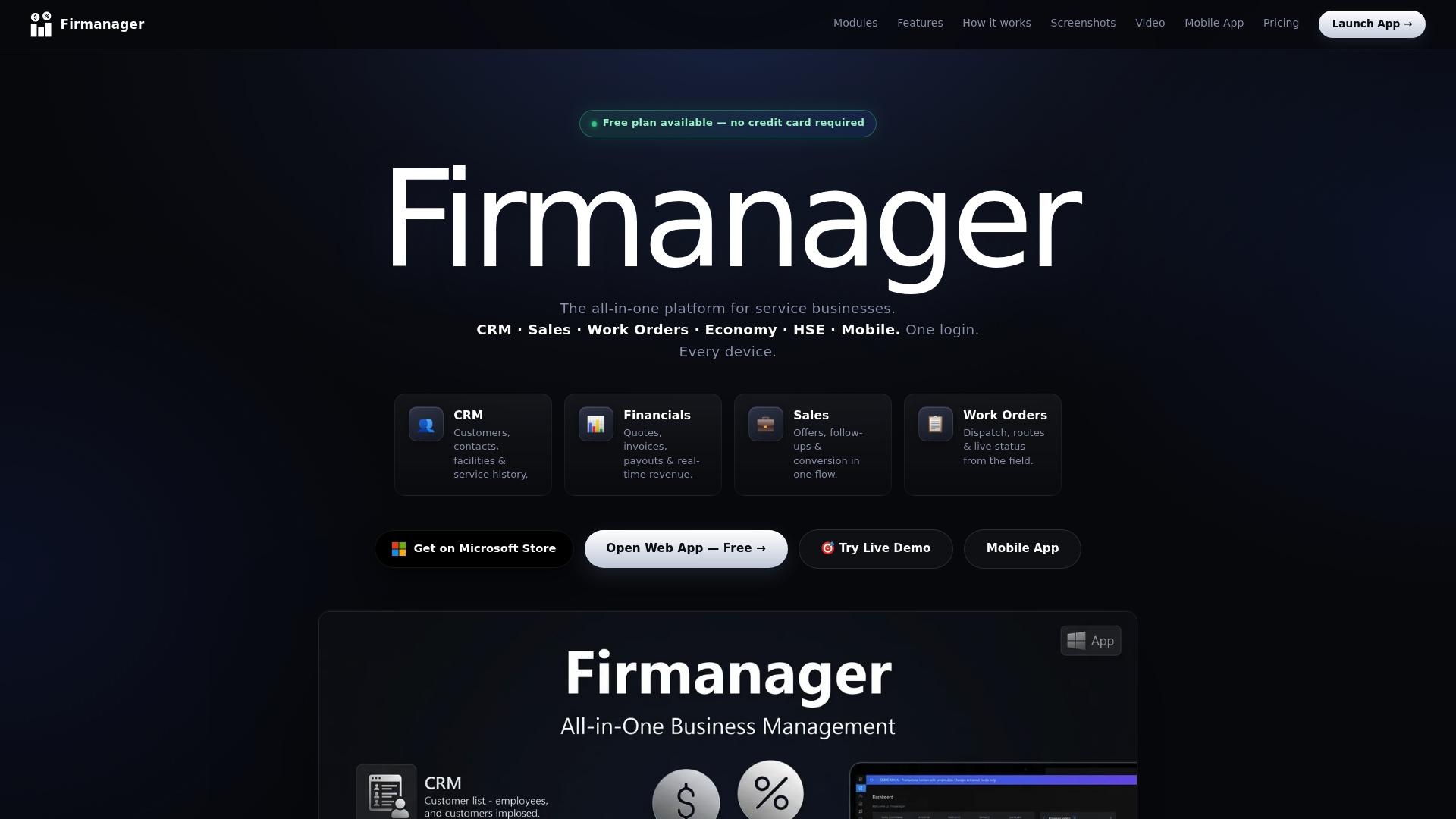
If you’re managing technicians, rooms, or equipment across more than a couple of calendars right now, the Free plan is the fastest way to see whether centralized scheduling actually removes your conflicts. The paid plans, including options with broader HR, invoicing, and compliance tools alongside scheduling, have pricing details available on the Firmanager website. Start on the Firmanager landing page, connect your team’s calendars, and mark your shared resources as required on day one.
FAQ
How Do You Avoid Double Bookings?
Centralize scheduling on one calendar, sync every calendar staff use in both directions, and add buffers plus required-resource rules to services that need a room or piece of equipment. Platforms handling high booking volume should also add database-level exclusion constraints so simultaneous requests can’t both succeed.
How Do You Prevent Double Booking in Microsoft Bookings?
Turn on buffer time on each service, enable “events on the office calendar affect availability,” and set required resources like room mailboxes to auto-accept with conflicts disallowed. Avoid letting customers pick “any staff” on services tied to a single shared resource.
How Do You Handle a Double Booking After It Happens?
Identify everyone affected first, then notify them quickly with an apology and a concrete reschedule option. Fix the root cause immediately afterward, whether that’s a calendar setting, a missing resource rule, or a manual entry error, so the same gap doesn’t repeat.
What Does “Double Booking” Mean?
Double booking means two appointments, meetings, or reservations have been confirmed for the same person, room, or resource during overlapping time windows. It includes direct time overlaps, resource collisions like two staff needing the same conference room, and travel-time shortages where a schedule looks valid but leaves no time to actually get between jobs.
Can Software Like Firmanager Actually Stop Double Bookings?
Firmanager reduces double bookings by keeping scheduling, dispatch, and required-resource rules on one real-time system instead of scattered calendars. Combined with the settings and buffer practices covered above, it addresses both the human causes and the resource-collision causes of scheduling conflicts.
Recommended
Run your whole business in one place
CRM, quotes, work orders, invoicing, expenses, HR and HSE — one login, every device. Free-forever plan.
Start free →