Avoid 10–15% Surprise Costs: Quote vs Estimate for Small Businesses
Avoid 10–15% Surprise Costs: Quote vs Estimate for Small Businesses
A quote is a fixed price you can be held to once a client accepts it. An estimate is a non-binding approximation that can shift as details emerge. The test is simple: if you can commit to the number right now, send a quote. If you cannot, send an estimate and say so in writing.
TL;DR:
- Sending a quote commits you to a fixed price, while an estimate remains a non-binding approximation that can vary by up to 10-15 percent based on conditions.
- Clearly labeling documents as “Quote” or “Estimate” and including signatures, expiry dates, and assumptions is crucial for enforceability and avoiding disputes.
- Use estimates when the full scope, materials, or prices are uncertain, and switch to quotes once measurements and details are confirmed.
- Incorporating ranges in pricing and setting expiration dates helps protect margins against cost fluctuations and material price volatility.
- Centralized quoting tools that include reusable templates, version tracking, expiry alerts, and direct invoice conversion reduce errors and improve clarity.
Table of Contents
- Quotes vs Estimates: What Each Term Actually Means
- Is a Quote Legally Binding?
- When Should You Send an Estimate Instead of a Quote?
- What Should a Written Quote or Estimate Include?
- Real Examples: Estimate vs. Quote Language in Practice
- How to Set Pricing That Protects Your Margin
- How to Turn an Estimate Into a Binding Quote
- How Firmanager Streamlines Quoting and Estimating
- When to Bend and When to Hold the Line
- Manage Every Quote and Estimate in One Place With Firmanager
- Sources
- FAQ
Quotes vs Estimates: What Each Term Actually Means
Confusion between these two words costs small businesses real money, usually because someone treated a rough number as a promise. Getting the vocabulary right protects your margin and your client relationship at the same time.
A quote is a fixed price for defined work. Once a client accepts it, you’re generally expected to honor it, absorbing any cost overruns yourself unless the scope changes. An estimate is your best professional guess at cost, offered before you know every variable. Neither party is locked in, and the final number can land higher or lower.
Two related terms cause almost as much confusion:
- Proposal: A broader document that combines pricing with your approach, timeline, and value pitch. It often contains a quote or estimate inside it, but it’s selling the relationship, not just the number.
- Bid: Common in construction and government contracting, a bid is a formal, often binding offer submitted competitively against other providers. Bids behave like quotes but usually follow strict submission rules.
The difference between a quote and an estimate really comes down to commitment level, and itemized scope with stated assumptions is what keeps either document from turning into a dispute.
Watch the language people use in casual conversation, because it reveals what they actually mean. “I’ll give you a rough number” signals an estimate. “Here’s what it’ll cost you” signals a quote, even if nobody writes the word down. In construction and trades especially, professionals often use the two terms interchangeably in conversation, which is exactly why the written document has to be unambiguous even when the verbal exchange wasn’t.
Is a Quote Legally Binding?
A quote is typically binding once a client accepts it, but the label on the page doesn’t decide that by itself. Courts and mediators look past the header and examine the wording, the signature, and how both parties actually behaved. Call a document an “estimate” but state a fixed price with no qualifying language, and a judge may still treat it as a binding offer.
The safest approach is to build enforceability, or the lack of it, directly into your document. That means:
- Label the document clearly as “Quote” or “Estimate” in the header, not buried in a footer.
- Include an acceptance clause with a signature or checkbox line, since silence or a verbal “sounds good” is much weaker proof of agreement.
- State an expiry date so the offer can’t be accepted months later at outdated pricing.
- List assumptions and exclusions explicitly, since undocumented assumptions are where most enforceability arguments start.
- Use plain non-binding language on estimates, such as “this is a preliminary estimate and final pricing may vary based on site conditions.”
Courts weigh conduct and wording over the document’s title when a client challenges a price after the fact. A handshake plus a scribbled number on an invoice pad can become a binding quote if you both acted as though the deal was locked, so the paperwork needs to say what you actually mean.
Pro Tip: Add one line to every estimate you send: “Non-binding estimate, subject to confirmation after site visit.” That single sentence does more legal work than almost anything else on the page.
When Should You Send an Estimate Instead of a Quote?
Send an estimate when you genuinely don’t know enough yet. Send a quote when you do. The trouble is that “enough” is subjective, so run through this checklist before you decide:
- Can you see the full scope? If you haven’t inspected the site, reviewed the full brief, or confirmed materials, default to an estimate.
- Do supplier lead times or prices fluctuate? Volatile material costs (lumber, steel, certain electronics) push toward an estimate with a short validity window, or a quote with a very tight expiry date.
- Does the client need a number for financing or procurement? Banks, landlords, and procurement departments often require a firm quote before releasing funds or approving a purchase order.
- Is the industry norm a firm number? Web development with a locked spec, printing jobs, and fixed-fee legal work usually call for quotes. Renovation, custom fabrication, and anything involving unknown site conditions lean toward estimates.
- How much negotiation room do you need? An estimate keeps the conversation open; a quote closes it. Early-stage sales conversations benefit from that flexibility, since estimates function as stage-of-sale guidance rather than a final commitment.
If three or more of these point toward uncertainty, send an estimate. Otherwise, a quote moves the deal forward faster and gives the client the budget certainty they’re usually asking for.
What Should a Written Quote or Estimate Include?
A document that looks professional and reads as unambiguous does most of the work of preventing disputes before they start. Whether you’re issuing a quote or an estimate, the skeleton is the same. What changes is the language you wrap around it.
Every document should include:
- Business name, contact details, and a document number for your own records.
- Client name and project address or description.
- Itemized line items: materials, labor hours or rates, permits, and taxes broken out separately, not bundled into one lump figure.
- A written scope statement describing exactly what’s included.
- An assumptions and exclusions section, the “what this does not cover” list that prevents most scope disputes before they happen.
- Payment terms, deposit requirements, and accepted methods.
- An expiry or validity date.
- A signature line or digital acceptance field.
For an estimate, mark it clearly: “Preliminary estimate, final cost may vary by up to 10 to 15 percent based on site conditions.” That range matters. Estimates commonly vary within that band once real conditions replace assumptions, and telling the client that up front turns a potential argument into an expected outcome.
For a quote, the phrasing flips: “This quote is valid for 30 days and represents the total fixed price for the scope described above.” No hedging, no range, just the number and the deadline.
Pro Tip: Keep a template for each document type with the non-binding or binding language pre-written. You’ll never accidentally send a fixed price when you meant to leave room to adjust.
Real Examples: Estimate vs. Quote Language in Practice
Seeing the wording side by side makes the distinction click faster than any definition does.
- The contractor. A homeowner asks for a kitchen remodel price before any wall has been opened up. You issue an estimate: “Based on a visual walkthrough, we estimate $18,000 to $24,000 for the described scope. This range excludes any plumbing or electrical issues discovered once demolition begins.” After the walls come down and you know exactly what you’re dealing with, you send a firm quote: “$21,400 total, fixed price, valid for 30 days, covering the scope and materials listed in Section 2.”
- The web developer. A client hands over a detailed brief with page counts, feature lists, and a content-ready site map. Because the scope is fully known upfront, you skip the estimate stage entirely and send a quote: “$6,800 fixed price for a 12-page WordPress site per the attached scope document, payable in three milestones.” Pricing pages that show real project ranges, like WebTechs’ breakdown of small business website costs, can help you sanity-check your own numbers before quoting.
- The hourly consultant. A new client wants strategic advice but hasn’t defined the engagement yet. You quote a range instead of a fixed fee: “$150 to $200 per hour depending on project complexity, with a written scope of work confirmed before billing begins.” Acceptance happens when the client signs the scope document, not before.
How to Set Pricing That Protects Your Margin
Single numbers feel confident, but they’re also where most cost disputes are born. Presenting a range, or a best case and worst case, gives clients a realistic picture and gives you room to be right.

Use a single fixed number only when your scope is fully locked and your supplier costs are stable. Use a range or scenario pricing when either variable is still moving. Presenting best case and worst case scenarios reduces disputes because the client sees the ceiling before work starts, not after the invoice arrives.
Expiry dates deserve more attention than most owners give them. A quote with no deadline is a quote that can be accepted six months later at prices that no longer reflect your material or labor costs.
- 30 days works well for jobs using volatile materials like lumber or steel.
- 60 to 90 days suits stable, labor-heavy service work where material costs barely move.
- Setting a firm expiry protects against cost fluctuations that would otherwise eat directly into your margin.
To handle overruns without a fight, build the tools into the document itself: a deposit due at signing, a capped overrun clause (“costs will not exceed quote by more than 10 percent without written approval”), and a documented change order process for anything outside the original scope.
How to Turn an Estimate Into a Binding Quote
Converting an estimate into a quote is really about closing the information gap that made you hedge in the first place.
- Re-survey the job. Once you’ve seen the site, confirmed measurements, or received final specs, revisit every line item from the original estimate.
- Itemize the firm number. Replace ranges with exact costs for materials, labor, and any subcontracted work.
- Route scope changes through a formal change order. Anything not in the original itemized scope gets a written change order with its own price and a signature line, not a verbal “sure, we’ll add that in.”
- Version and date every document. Label revisions clearly (“Quote v2, supersedes estimate dated March 3, 2026”) so nobody argues over which number was final.
Pro Tip: Never let a change order live in a text message thread. Even a one-line emailed confirmation beats a verbal agreement if a client later disputes the added cost.
How Firmanager Streamlines Quoting and Estimating
Most pricing disputes trace back to a document that wasn’t itemized clearly, an assumption nobody wrote down, or a quote that expired without anyone noticing. A connected quoting and estimating workflow closes those gaps by design, not by discipline.
Centralizing your scope, assumptions, and pricing in one system means every quote and estimate follows the same structure, so nothing gets left off by accident. That consistency alone eliminates a large share of the disputes covered above.
Look for these capabilities when you evaluate any platform:
- Reusable templates that separate estimate language from quote language automatically.
- Version tracking so you can prove which document was final if a client pushes back.
- Automatic expiry reminders so quotes don’t sit open past their validity window.
- Direct quote-to-invoice conversion once work is accepted, so accepted pricing carries straight through to billing without re-entry.
When to Bend and When to Hold the Line
Flexibility wins early conversations. A generous, well-explained estimate gets a hesitant client talking to you instead of a competitor, and that early trust often matters more than pinning down every dollar on day one.
But flexibility has a shelf life. Once you’ve inspected the site, priced the materials, and know your labor hours, holding onto estimate language just to keep the client comfortable is how contractors lose money on jobs they should have profited from.
The rule I’d give any owner: estimate to open the door, quote to close the deal. If you’re still hedging after you’ve done the work to know the real number, you’re not protecting the relationship. You’re avoiding an uncomfortable conversation.
— KaiosMedia
Manage Every Quote and Estimate in One Place With Firmanager
Firmanager replaces the scattered mix of spreadsheets, PDF templates, and email threads most service businesses use to track pricing, giving you one system where every quote and estimate follows the same itemized format from the first draft to the final invoice.
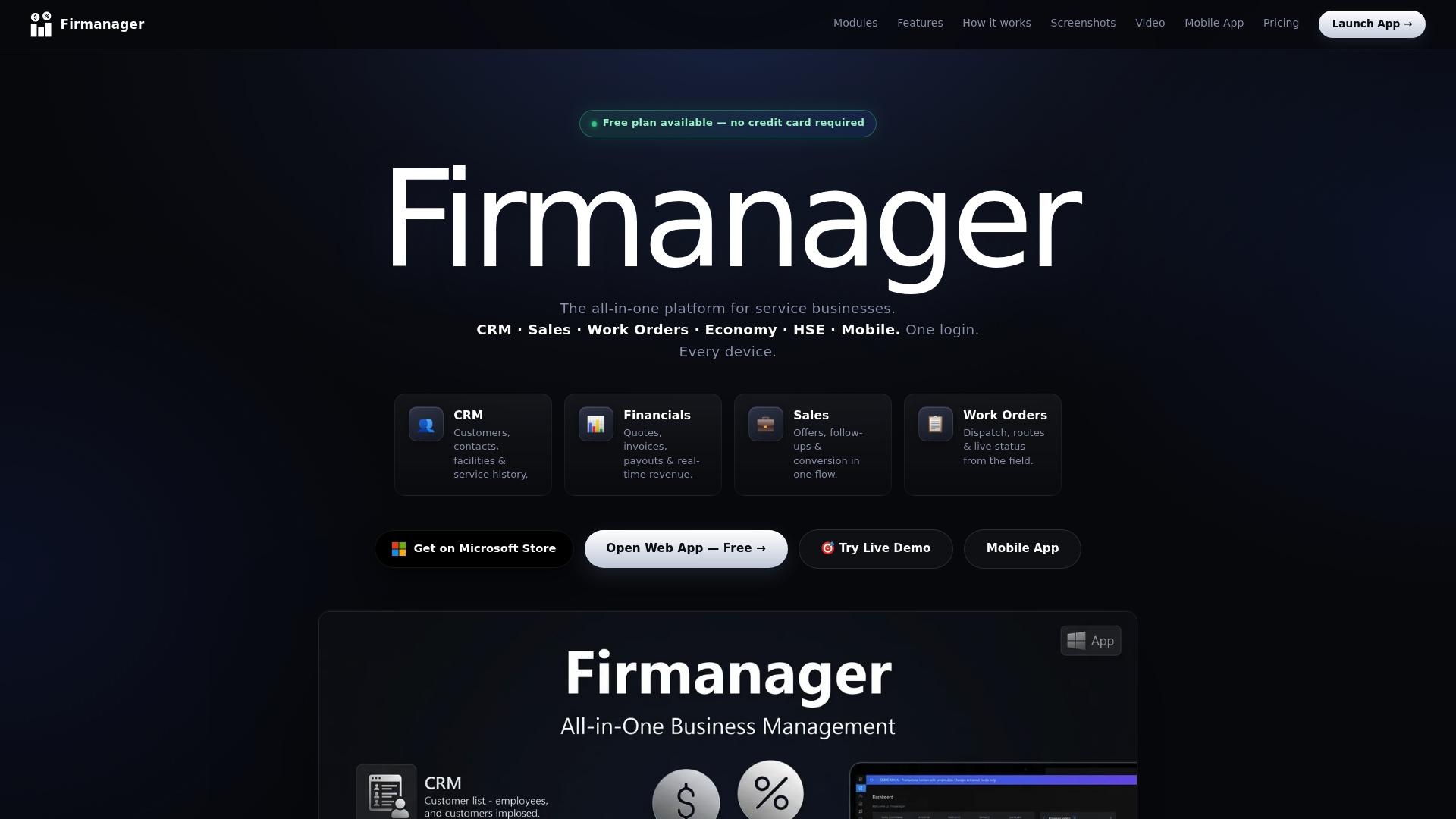
Inside the platform, you build quotes and estimates from reusable templates that already separate binding language from non-binding language, so you never accidentally send a fixed price when you meant to leave room to adjust. Version history keeps every revision on record, expiry reminders flag quotes before they go stale, and accepted quotes convert directly into invoices through the built-in Stripe integration, cutting out the re-entry step that causes billing errors on phased or multi-stage jobs. If your pricing documents are still living in three different tools, start a free trial at Firmanager and build your first template today.
Sources
- Quote vs. Estimate: What’s the Difference? | Bench
- Estimate vs Quote vs Proposal in Construction (2026 Guide) | Projul
- What Is the Difference Between a Quote and an Estimate? | CashflowDesk
- What is the difference between a quote and an estimate? | GoCardless
FAQ
What Is the Difference Between a Quote and an Estimate?
A quote is a fixed price the client can generally hold you to once they accept it. An estimate is a non-binding approximation that can change once you know the full scope of the job.
Is There a Legal Difference Between a Quote and an Estimate?
Yes. Courts look at the wording, signatures, and conduct of both parties rather than the document’s title alone, so a poorly worded “estimate” with no hedging language can still be treated as a binding offer.
What Is a Quote and an Estimate, in Simple Terms?
A quote tells the client exactly what they’ll pay. An estimate tells them roughly what to expect, often varying by 10 to 15 percent once real conditions are known.
What Is the 3-Quote Rule?
The 3-quote rule is a common purchasing practice, especially in construction and larger procurement, where a buyer collects three separate quotes from different providers before choosing one, mainly to confirm fair market pricing rather than a legal requirement.
Can Software Help Me Manage Quotes and Estimates?
Yes. A platform like Firmanager centralizes templates, tracks version history, sends expiry reminders, and converts accepted quotes directly into invoices, reducing the manual errors that cause pricing disputes.
Recommended
Run your whole business in one place
CRM, quotes, work orders, invoicing, expenses, HR and HSE — one login, every device. Free-forever plan.
Start free →