SMS Consent Requirements in the USA: A Business Guide

SMS Consent Requirements in the USA: A Business Guide
If you text customers in the United States, the rule starts with one question: is the message marketing or informational? Marketing texts sent with an autodialer to wireless numbers generally require prior written consent, with narrow exceptions such as emergencies. Informational texts, such as appointment updates, generally need prior express consent, which can be oral or written. This guide shows what each level means in practice, what your opt-in must say, how to handle opt-outs, and what records to keep.
This is general information for service businesses, not legal advice. Where a rule decides what you build, we say which professional to ask.
TL;DR
- Marketing and promotional texts need prior express written consent. Informational texts generally need prior express consent, oral or written.
- Your opt-in must identify you, explain how to opt in and out, and disclose any fees. Consent cannot be bought, sold or passed to other parties.
- Honor opt-out requests quickly: the FCC’s revocation rules expect reasonable requests to be honored within ten business days.
- State laws add rules on top of federal law, and they are changing. Check each state where your customers live.
- Keep proof of consent for as long as you text the person, and at least until they withdraw consent.
Table of Contents
- 📜 The federal baseline: TCPA and FCC rules
- 🔀 Marketing texts vs. service texts
- ✍️ What a compliant opt-in must say
- 📥 Ways to collect consent
- 🛑 Opt-outs and revocation
- 🗺️ State rules on top of federal law
- 🗂️ Consent records you need to keep
- 💸 What noncompliance can cost
- Our perspective
- 🚀 Keep customers, jobs and messages in one place
- ✅ A practical consent checklist
- FAQ
- Sources
📜 The federal baseline: TCPA and FCC rules
The main federal law is the Telephone Consumer Protection Act (TCPA), enforced through FCC rules. The FCC explains that unsolicited marketing texts to wireless numbers sent with an autodialer generally require prior written consent. The agency also treats robotexts as subject to the TCPA’s do-not-call provisions that govern commercial advertising messages.
Two recent FCC changes matter to any business that texts at scale:
- 2024 rule. The FCC’s Federal Register order codifies National Do-Not-Call Registry protections for texts. It also requires comparison-shopping websites to get consent one seller at a time when written consent is required.
- 2026 revocation order. The FCC removed the “revoke all” requirement and allows informational opt-outs at the campaign level. It also seeks comment on further changes, so expect more movement.
Carriers and messaging providers add their own layer. Microsoft points to the CTIA’s Messaging Principles and Best Practices as a helpful overview of industry standards. Breaking those standards will not bring an FCC letter, but it can get your messages blocked.
🔀 Marketing texts vs. service texts
The type of message sets the consent level. Sort every message your team sends into one of these groups before you build a sign-up form.
| Message type | Examples for a service business | Consent generally needed |
|---|---|---|
| Marketing or promotional | Seasonal discounts, upsell offers, “book now” campaigns | Prior express written consent |
| Informational | Appointment confirmations, technician arrival updates, invoice notices | Prior express consent (oral or written) |
| Reply to a customer’s own text | Answer to a question the customer sent you | Implied consent for one immediate response |
The split comes from Microsoft’s messaging policy: marketing messages require written consent, while informational ones generally require prior express consent. The third row rests on Optimizely’s consent guidance. When a consumer starts the exchange, implied consent allows a single immediate response with relevant information. Anything beyond that needs consent.
Mixed messages are the common trap. A reminder that also carries a coupon can be read as marketing. If you want to promote in the same thread, get written marketing consent first, or keep the reminder clean. If you run a field service team, our guide to SMS appointment reminders shows how to keep reminders purely informational.
✍️ What a compliant opt-in must say
An opt-in is the moment a customer agrees to receive texts. Microsoft’s policy says a call to action should identify the sender, give clear opt-in and opt-out instructions, and disclose fees. In practice, a sign-up form should cover these points:
- Who is texting. Use your business name, not a vague label.
- What they will receive. Say “appointment updates” or “promotional offers”, whichever applies. If you send both, ask for each separately.
- How to stop. Tell them the keyword to reply with. Twilio requires the initial message to include “Reply STOP to unsubscribe” or equivalent instructions using another standard opt-out keyword.
- Any cost. Mention that message and data rates may apply.
- Whether the opt-in is optional. Do not make texting a condition of buying your service when the texts are marketing.
Sample wording for a marketing opt-in on a booking form:
By checking this box, I agree to receive recurring promotional text messages from [Business Name] at the number above. Message and data rates may apply. Reply STOP to unsubscribe. Consent is not a condition of purchase.
Keep the box unchecked by default. A pre-ticked box is hard to defend as an affirmative act. Before launching a campaign, have a TCPA attorney review the final wording, because courts read these forms closely.
📥 Ways to collect consent
There is more than one valid route. Microsoft’s policy lists website number entry, a consumer-initiated text, and a sign-up keyword as ways to collect consent. For a service business, that usually looks like:
- Web form or booking page. The customer enters a mobile number and ticks a disclosure box.
- Text-to-join. The customer texts a keyword to your number after seeing the terms on a sign, invoice or website.
- Paper or tablet at the job site. The customer signs a form that contains the same disclosures. Scan it and attach it to the customer record.
Three rules apply no matter how you collect:
- One seller at a time. When written consent is required, comparison-shopping sites must get it one seller at a time. One checkbox cannot cover a list of companies.
- No lists. Twilio’s policy states that consent cannot be bought, sold, rented, or transferred to affiliates or other parties. A purchased list gives you phone numbers, not permission.
- Keep the scope. Consent to receive appointment texts is not consent to receive promotions.
🛑 Opt-outs and revocation
Honoring a stop request is as important as getting the opt-in. Under the FCC’s revised rules, recipients can revoke consent using a designated exclusive method, such as a text reply with a specified keyword or a designated website or phone number. Reasonable requests must be honored within ten business days.
A workable opt-out process:
- Support STOP and the other standard opt-out keywords your provider recognizes.
- Confirm the opt-out with one final message, then send nothing else.
- Flag the number in your customer system so no team member or automation texts it again.
- Treat a clear plain-language request (“please don’t text me”) as a stop request, even if it is not your keyword. Train your office staff and dispatchers to log those requests, since they often arrive by phone.
The 2026 order lets informational opt-outs apply at the campaign level, so a customer can stop promotions without losing job updates. Build your preferences so the two are separate. Our customer communication plan shows how to map each touchpoint to a message type.
🗺️ State rules on top of federal law
Federal consent is the floor. Several states have passed their own telemarketing or “mini-TCPA” laws. Texas and Oregon have enacted their own mini-TCPA statutes, and Pennsylvania’s SB 992 would extend telephone-solicitation rules to texts, with quiet hours and opt-out keywords. The bill was passed in July 2026 and sent to the governor, so check its current status before you rely on it.
What to do about it:
- List the states where your customers actually live, not just where your office is.
- Apply the strictest rule you meet to your whole list, so you run one process instead of fifty.
- Re-check each state when you plan a new campaign. These laws shift often, and a rule that was a proposal last quarter may be law now.
If you text across many states, a lawyer who handles TCPA and state telemarketing law is the right person to build your state checklist.
🗂️ Consent records you need to keep
Consent you cannot prove is consent you do not have. Twilio’s policy says businesses must retain proof of consent as long as needed to meet legal requirements and at least until the recipient withdraws it. A National Law Review analysis adds that a consent defense is only as strong as its evidence, and that you should be ready to reconstruct consent years later.
For each customer, store:
- The phone number and the name on the record
- The date and time of consent
- The channel (web form, text keyword, signed paper form)
- The exact disclosure text the customer saw, with a version number
- The scope: informational, marketing, or both
- Any opt-out, with its date and method
The same discipline applies to review requests. A text asking for a Google review is a message you must be able to justify, and guidance on compliant SMS review requests shows how consent proof and outreach fit together. For a wider view of what a good log contains, see our list of audit trail fields to capture.
💸 What noncompliance can cost
Penalties vary by law. The FTC says a failure to provide required disclosures clearly and conspicuously under the Telemarketing Sales Rule can bring a civil penalty of $53,088 per violation. Private lawsuits under the TCPA and state laws are a separate risk, and they are often brought as class actions. Carriers can also block or filter your traffic.

The cost of getting it right is small by comparison: a clear form, a stored record and a working STOP reply.
Our perspective
We built Firmanager for service businesses, and we see the same pattern in field teams. Texting problems rarely start with bad intent. They start when customer data lives in three places: a CRM, a spreadsheet of job contacts and an invoicing tool. Nobody can say which customer agreed to what.
Our advice is simple:
- Keep one customer record that holds the phone number, consent scope and opt-out status.
- Separate service messages from promotions in your process, not just in your wording.
- Choose the channel for the job. If you are weighing texts against email for promotions, this comparison of SMS vs. email marketing helps frame the decision.
- Review your consent flow whenever the rules change, and read our TCPA SMS compliance guide for the marketing side.
A platform cannot make you compliant on its own, but one login and one customer record makes compliance far easier to run and to prove.
— KaiosMedia
🚀 Keep customers, jobs and messages in one place
Firmanager is an all-in-one platform for service businesses. It combines CRM, work orders, invoicing, route and dispatch, and real-time notifications by SMS and email, all behind one login. Your customer record, your jobs and your outgoing messages sit together, so your team can see who they are contacting and why.
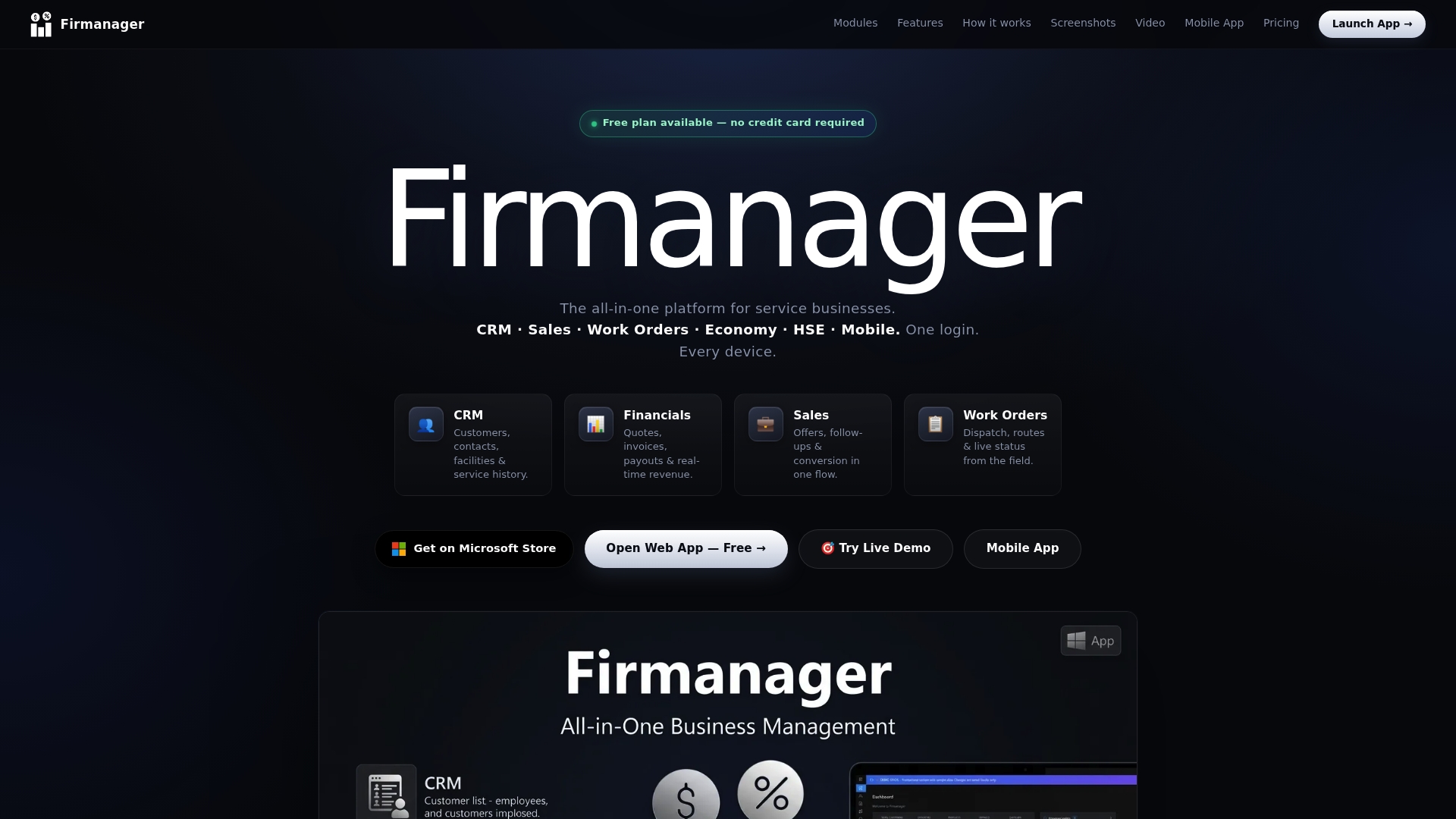
Plans are published on our site: Free at $0, Pro at $19 per month and Business at $49 per month. You can start on the free plan and see how it fits your crew. See the Firmanager plans.
✅ A practical consent checklist
Use this list before you send your next text campaign.
- Sort each message type into marketing or informational.
- Write separate opt-in language for each, naming your business, the message type, the opt-out keyword and possible fees.
- Leave consent boxes unticked and make marketing consent optional.
- Store the date, channel, disclosure version and scope for every opt-in.
- Never upload purchased or shared lists.
- Support STOP and other standard keywords, and honor requests within ten business days.
- Check the state rules where your customers live.
- Have a TCPA attorney review your forms and flows.
FAQ
Are unsolicited marketing texts illegal in the U.S.?
Generally yes, when they go to wireless numbers by autodialer without prior written consent. The FCC’s consumer guidance lists emergency messages as an exception. Texts to numbers on the National Do-Not-Call Registry also draw scrutiny under the 2024 rule.
Do I need written consent for appointment reminders?
Usually not. Informational messages generally require prior express consent, which can be oral or written, per Microsoft’s messaging policy. Keep the reminder free of promotions, and record how the customer gave their number and agreed to updates.
Can I text someone who texted me first?
You can send one immediate response with the relevant information. Optimizely’s guidance says further messages require consent. If the customer wants ongoing updates, invite them to opt in properly.
How fast must I honor a STOP request?
The FCC’s revised rules say reasonable revocation requests must be honored within ten business days, according to Kelley Drye’s analysis. Most businesses process opt-outs automatically, right away, so a customer never receives a second message.
Can I buy a phone list for text campaigns?
No. Consent cannot be bought, sold, rented, or transferred to other parties, so a purchased list carries no permission to text. Build your list through your own sign-ups.
Sources
- Stop Unwanted Robocalls and Texts, FCC
- Unlawful Communications: Robocalls, Caller ID Spoofing, FCC
- Targeting and Eliminating Unlawful Text Messages, Federal Register
- FCC Revises TCPA Consent Revocation Rules, Kelley Drye
- Messaging Policy, Azure Communication Services
- Understand SMS consent and compliance, Optimizely
- Twilio Messaging Policy
- Information on Pennsylvania’s New Telemarketing Law, National Law Review
- Complying with the Telemarketing Sales Rule, FTC
- Compliant SMS review requests
- SMS vs. email marketing
Recommended
Run your whole business in one place
CRM, quotes, work orders, invoicing, expenses, HR and HSE — one login, every device. Free-forever plan.
Start free →