Managers: Three Layer Time Theft Prevention You Can Pilot in 30 Days
Managers: Three Layer Time Theft Prevention You Can Pilot in 30 Days
Time theft prevention works when you combine three layers: a written policy that defines the problem, automated systems that remove manual guesswork, and transparent data access that keeps employees on your side. The immediate move is simple. Write a standalone time-theft policy this week, then run a 30-day baseline before you enforce anything. Techniques like geofencing and GPS-stamped clock-ins, paired with a platform like Firmanager, make that baseline realistic to collect.
TL;DR:
- Automated monitoring tools combined with a clear, signed policy can reduce payroll discrepancies by 20 to 30 percent within the first month.
- GPS tracking and device ID verification are essential for detecting buddy punching and travel time padding in field teams, especially when paired with a baseline data collection period.
- Transparency tools that give employees access to their hours and activity logs decrease manipulation and foster trust before enforcement measures are introduced.
- Implementing a three-layer prevention framework—policy, technology, and transparency—requires a staged rollout over 30 to 90 days, with initial measurement to calibrate detection thresholds.
- An integrated platform like Firmanager streamlines time theft prevention by centralizing geofencing, self-service, audit trails, and invoicing, reducing manual errors and scattered data.
Table of Contents
- What Is Time Theft and Why Does It Cost So Much?
- What Are the Most Common Types of Time Theft?
- How Do You Detect Time Theft Before It Becomes a Pattern?
- What Is the Three-Layer Framework for Preventing Time Theft?
- Which Technology Actually Stops Time Theft?
- How Do You Write a Fair Time-Theft Policy?
- How Do You Roll Out a Prevention Plan in 30 to 90 Days?
- How Does an All-in-One Platform Support This Framework?
- Why Fair Prevention Beats Punitive Prevention
- Get Started With Firmanager for Time Theft Prevention
- Sources
What Is Time Theft and Why Does It Cost So Much?
Time theft happens when an employee gets paid for hours they didn’t actually work, whether they meant to cheat the clock or simply lost track of it. Not every instance is deliberate. Someone who forgets to clock out for lunch is technically stealing time, but it’s an accounting error, not fraud.
The financial damage adds up regardless of intent. Payroll leakage from unworked hours distorts your labor cost per job, throws off utilization metrics you rely on for bidding and staffing, and, left unaddressed, breeds resentment among employees who show up on time while others don’t. Vendor estimates suggest buddy punching alone costs US employers hundreds of millions of dollars annually, a scale that explains why so many field service and hourly operations treat this as a payroll priority, not a minor annoyance.
- Payroll leakage inflates labor costs on every job or shift.
- Distorted hours data corrupts staffing and bidding decisions.
- Unchecked time theft erodes morale among honest employees.
What Are the Most Common Types of Time Theft?
Recognizing the pattern is half the battle. Most time theft falls into a handful of recurring categories, and which ones show up depends heavily on whether your team works in the field or at a desk.
- Buddy punching. One employee clocks in for another who hasn’t arrived yet. Common on shift-based crews with a shared time clock.
- Extended breaks. A 15-minute break stretches to 40 minutes, repeated daily until it adds up to hours per week.
- Timesheet falsification. Rounding up hours, backdating entries, or logging work that never happened.
- Personal tasks on the clock. Running errands, browsing social media, or handling side jobs during paid hours.
- Inflated travel time. Field techs padding drive time between job sites, a category unique to mobile crews.
- Idle time. Logged in but not producing, common with remote or desk-based staff using activity-tracking software.
Field teams tend toward buddy punching and travel-time padding because job sites are decentralized. Remote and office staff lean toward idle time and personal-task drift, since nobody’s watching the clock directly.
How Do You Detect Time Theft Before It Becomes a Pattern?
Detection starts with data, not suspicion. A handful of objective signals should trigger a closer look: identical clock-in times across multiple days, unexplained overtime that doesn’t match output, a persistent gap between scheduled hours and logged hours, or a crew that logs full days but delivers noticeably less finished work than comparable teams.
Running the check itself doesn’t require anything exotic. Cross-reference GPS pings against clock-in timestamps for field staff, review device IDs tied to each punch to catch shared logins, and pull edit histories on timesheets. Manually adjusted entries with no supervisor note are a common blind spot.
Statistic Callout: Organizations that deploy automated monitoring alongside clear policy communication report payroll discrepancies dropping 20 to 30 percent within the first month, evidence that the detection layer alone changes behavior once employees know it exists.
Before confronting anyone, assemble an evidence checklist:
- Timestamped clock-in and clock-out logs for the disputed period.
- GPS or geofence data confirming location at time of punch.
- Device ID records showing which hardware logged the entry.
- Any timesheet edits, with dates and the name of who made them.
What Is the Three-Layer Framework for Preventing Time Theft?
A durable answer to “how to stop time theft” isn’t one tool. It’s three layers working together, and skipping any one of them weakens the other two.
Layer 1: A standalone policy. Don’t bury time-theft language inside a general employee handbook. A dedicated policy defines what counts as time theft, discloses exactly what’s being monitored, and spells out the discipline sequence. Employees sign it at onboarding, and it gets reviewed annually.
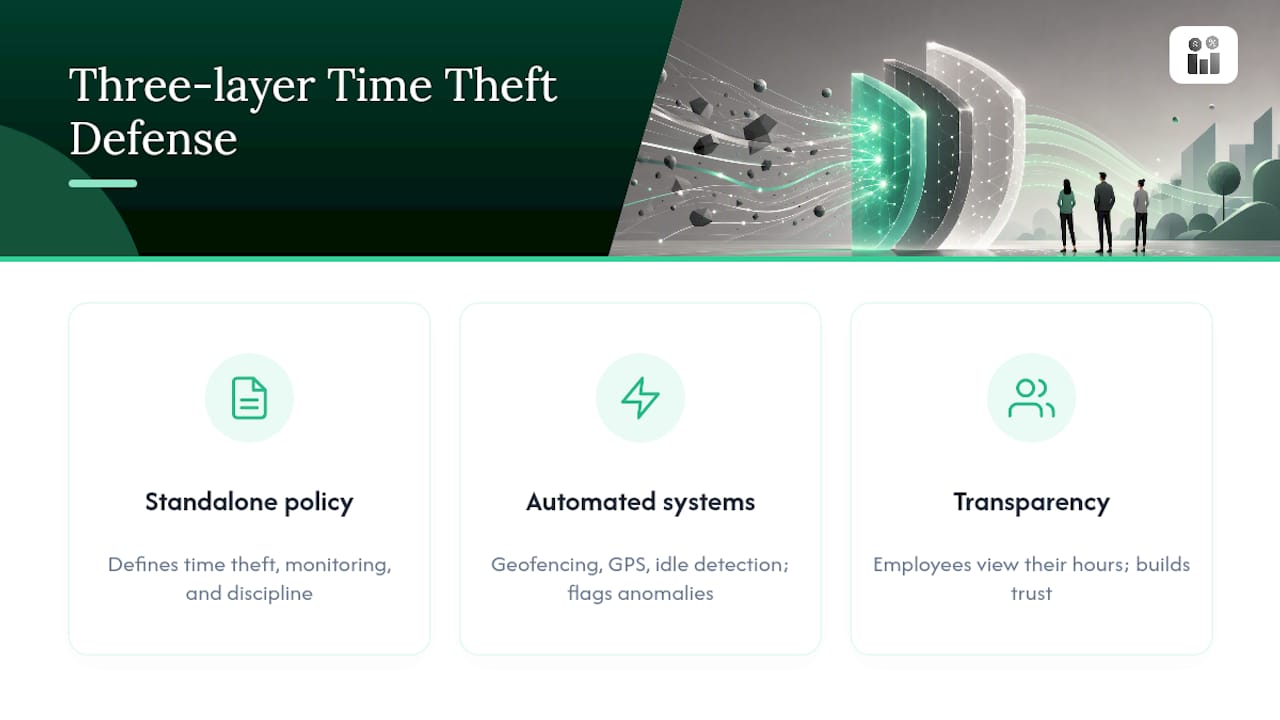
Layer 2: Automated systems. Manual timesheets invite both honest mistakes and deliberate fraud. Geofencing, GPS capture, and idle-time detection remove the guesswork, flagging anomalies before they become habits rather than after payroll runs.
Layer 3: Transparency. Employees who can see their own time data, hours worked, overtime accrued, breaks logged, have far less incentive to manipulate it. Letting staff view their own records lowers resistance to monitoring and turns a surveillance tool into a fairness tool.
Punitive-only approaches, ones that skip straight to write-ups without policy clarity or data transparency, tend to backfire. They breed distrust, invite legal exposure, and rarely address the accidental cases, which are often the majority.
Pro Tip: Roll out transparency before you roll out enforcement. Employees who’ve had access to their own hours for a month rarely push back when you tighten the rules, because they already trust the numbers.
Which Technology Actually Stops Time Theft?
Picking the right category of tool matters more than picking a specific brand. Four categories cover most use cases:
- Biometric or timeclock hardware. Fingerprint or facial-recognition clocks stop buddy punching outright, but check the fallback mode. Many biometric systems default to PIN entry when a scan fails, which quietly undoes the anti-buddy-punch protection you paid for.
- GPS and geofencing mobile apps. Ideal for field service crews. A tool like a rugged GPS tracker or a geofenced mobile app confirms a technician was actually on-site when they clocked in.
- Activity-based desktop tracking. Useful for remote and office staff, though it raises privacy questions faster than field-focused tools do.
- Payroll integrations. Systems that sync tracked hours directly into payroll cut the manual entry step where a lot of falsification happens.
Biometric systems carry a legal flag worth knowing: states including Illinois regulate biometric data collection under laws like BIPA, so confirm compliance before deploying fingerprint or facial scanners.
Before signing with any vendor, test three things in the demo: what happens when a scan or GPS ping fails, whether edit logs are visible and timestamped, and what access level employees get to their own records.
How Do You Write a Fair Time-Theft Policy?
A policy that holds up legally and operationally needs specific components, not vague language about “integrity.”
- A clear definition of time theft, with examples relevant to your industry.
- Timekeeping procedures: how to clock in, how to log breaks, how to request corrections.
- What counts as acceptable personal use of paid time, if any.
- Full disclosure of what’s monitored and how the data is used.
- An approval workflow for timesheet edits, with a named approver.
- An annual review clause, ideally with legal counsel sign-off.
Discipline should escalate, not jump straight to termination. Coaching comes first for accidental or minor issues, followed by a verbal warning, then written warning, then suspension. Termination stays reserved for deliberate, well-documented fraud. Keep every step on record, avoid docking wages as an informal punishment, since that carries its own legal risk, and make clear that reporting a coworker’s time theft won’t trigger retaliation.
How Do You Roll Out a Prevention Plan in 30 to 90 Days?
Implementation works best as a sequence, not a single launch date.
- Weeks 1 to 2: Pre-launch. Pick a pilot group (one crew or department works better than company-wide rollout), have legal review your policy draft, and communicate the change clearly before any monitoring starts.
- Days 1 to 30: Baseline. Run the new system without enforcing strict penalties yet, collecting data on natural variance in clock-in times, break lengths, and travel time so your alert thresholds reflect reality instead of guesswork.
- Days 31 to 60: Launch. Roll out full enforcement with the discipline ladder in place, using dashboards that surface anomalies as they happen rather than at month-end.
- Days 61 to 90: Measure and adjust. Compare payroll discrepancy rates against your baseline, coach where needed, and revise thresholds or communications based on what the data actually shows.
How Does an All-in-One Platform Support This Framework?
Integrated operations software maps naturally onto all three prevention layers, which is exactly why a platform approach beats stitching together separate point tools. Firmanager’s time and leave tracking module handles Layer 2 automation, while its employee self-service portal covers Layer 3 transparency by giving staff direct access to their own logged hours.
For field crews, GPS-tagged mobile job logging creates the audit trail that field service teams need without storing biometric identifiers. Because everything runs through one login, audit trails stay centralized instead of scattered across three disconnected apps.
- Fewer manual timesheet edits, since field data logs automatically.
- Clearer audit trails tied to job records and approvals.
- Integrated invoicing means hours worked connect directly to what gets billed.
Why Fair Prevention Beats Punitive Prevention
Time theft prevention isn’t about catching people. It’s about protecting the employees who already show up on time and making sure payroll reflects reality. Punitive-first systems catch cheaters occasionally and alienate everyone else constantly.
The framework works because it layers, policy, technology, and culture, rather than leaning on one alone. Pilot it small, measure the baseline honestly, and adjust the rules based on what your own data shows rather than what a vendor promised.
— KaiosMedia
Get Started With Firmanager for Time Theft Prevention
Certain platforms give service businesses one login to run the entire three-layer framework instead of juggling a timeclock app, a GPS tracker, and a separate payroll tool. For field service teams, this can mean GPS-verified mobile clock-ins, an employee self-service portal for transparency, and audit trails that sync into invoicing, all inside one modular platform.
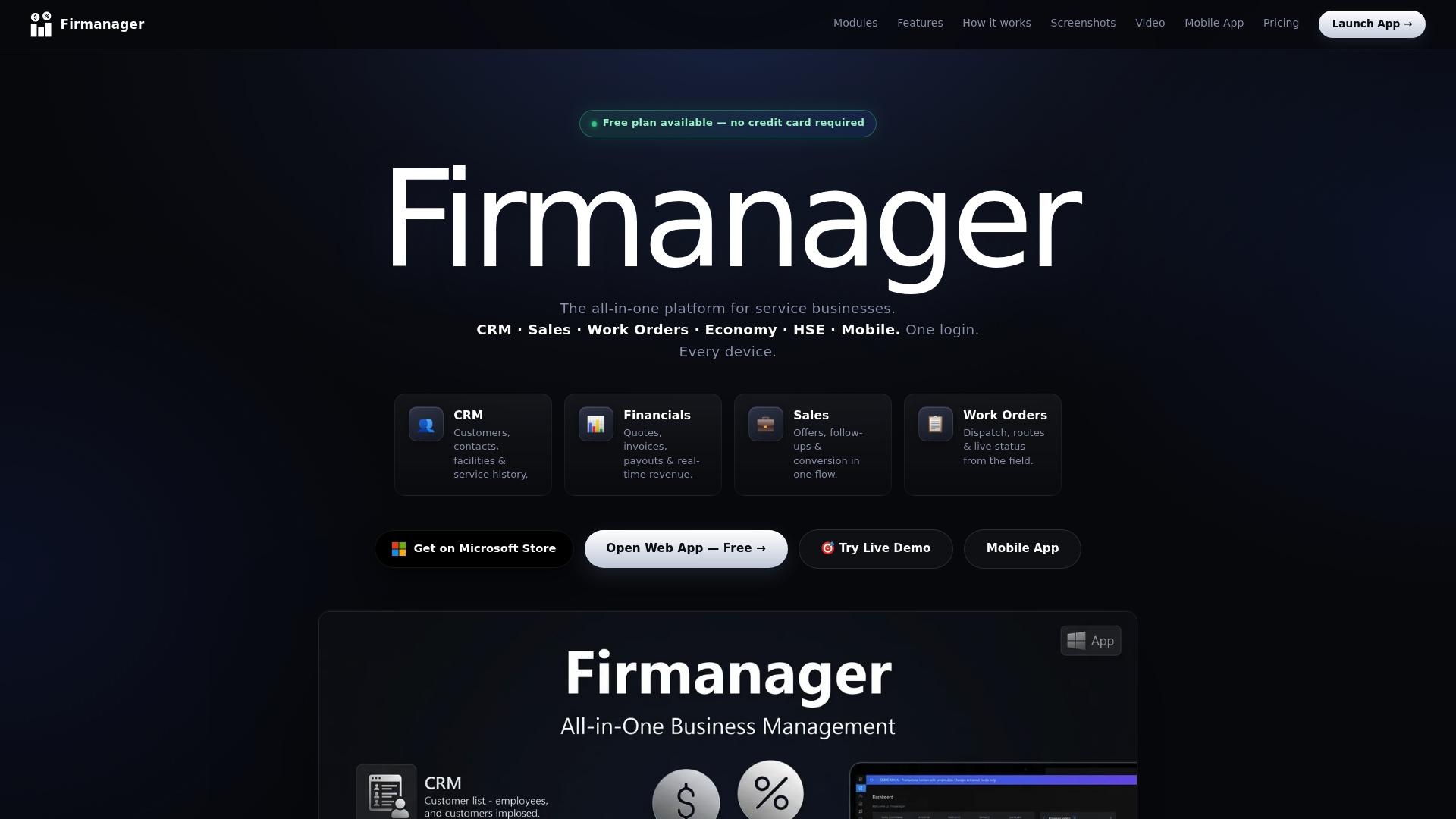
If your team is spread across job sites and your current tracking method is a paper timesheet or a spreadsheet nobody trusts, Firmanager replaces that gap with real-time data you can actually act on. Check out the Firmanager platform and see how the time-tracking module fits your crew size before your next payroll cycle.
Sources
Recommended
Run your whole business in one place
CRM, quotes, work orders, invoicing, expenses, HR and HSE — one login, every device. Free-forever plan.
Start free →