Decisions Within 2 Days for Small HR Teams: Leave Approval Workflow

Decisions Within 2 Days for Small HR Teams: Leave Approval Workflow
A practical leave approval workflow uses four layers: intake, validation, routing, and recording. It keeps short requests approved within two working days, gives employees visible status at every stage, and produces an audit trail that holds up under FMLA scrutiny.
TL;DR:
- Leave requests should be captured using a standard form that records leave type, dates, duration, and supporting documentation to prevent incomplete submissions.
- Routing rules should match leave type and duration, with short requests directed to managers within two days and complex or FMLA requests escalated immediately to HR.
- Automated tracking fields like leave balance snapshots and request status are essential to maintain auditability and reduce approval delays or reversals.
- Access controls must restrict medical documentation to HR and managers with a legitimate need, while employee and manager views are limited to relevant leave data.
- Recording decisions with precise timestamps and attaching the exact reviewer snapshot supports compliance, especially under FMLA requirements for retention and confidentiality.
Table of Contents
- Design the workflow: steps, roles, and a simple approval map
- Leave request data elements and status model
- Admin setup: permissions, approver configuration, and submit-and-track flow
- Routing rules, SLAs, and escalation: preventing bottlenecks
- Templates, automation tools, and integrations to speed implementation
- Recording, auditability, and FMLA compliance essentials
- Practical pitfalls and tests from field-service operations
- How Firmanager implements this workflow
- Sources
- FAQ
Design the workflow: steps, roles, and a simple approval map
A leave approval workflow works best when each of the four layers has a clear job. Intake collects the request details. Validation checks eligibility and balance. Routing sends the request to the right person. Recording locks in the decision with an auditable snapshot.
- Intake: capture leave type, dates, duration, and reason through a standard form so nothing arrives incomplete.
- Validation: confirm leave balance, check policy eligibility, and flag any FMLA-qualifying conditions before routing.
- Routing: send the request to the correct approver based on leave type and length, not a single fixed chain.
- Recording: log the decision, timestamp, and reviewer identity, then attach the reviewed snapshot to the employee’s file.
Roles matter as much as steps. The employee submits, the direct manager handles routine approvals, an HR reviewer signs off on anything touching medical leave or compliance, and a backup approver covers absences so requests never stall waiting on one person. Encode delegation as a rule, not a manual workaround, so a backup activates automatically when the primary approver is unavailable.
A simple mapping template helps small teams see the whole picture at once: a one-day request might need only manager approval, a two to three day request might add an HR notification, and an extended medical or FMLA request routes straight to HR with documentation requirements attached. An external breakdown of approval workflow tests and a copyable matrix offers a useful starting structure for building this out.
Pro Tip: Build your routing map on paper first. If you can’t draw it in five boxes, it’s too complicated to automate.
Leave request data elements and status model
Automation only works when every request carries the same fields. Missing data is the most common reason approvals stall or get reversed later.
- Employee ID and department, so routing rules know where the request belongs.
- Leave type and category (vacation, sick, medical, unpaid, FMLA).
- Start and end dates and times, including partial-day requests.
- Duration, calculated automatically from the dates entered.
- Leave balance snapshot, taken at the moment of submission.
- Reason or supporting documentation, with FMLA designation flagged separately.
A minimal status lifecycle covers submitted, under review, approved, denied, and closed. Snapshot the request at the moment of approval or denial, not after, so the record reflects exactly what the reviewer saw. Attaching that version to the employee’s file protects both sides if a dispute comes up later.
Visible status tracking matters as much as the decision itself: keeping employees informed at each stage reduces frustration and prevents disengagement, and it gives HR a defensible record if a leave decision is ever questioned.

Admin setup: permissions, approver configuration, and submit-and-track flow
Permissions determine who sees what, and medical documentation needs its own lane. Keep certifications and health details separate from general personnel files, in line with ADA and GINA privacy expectations, and restrict access to the people who legally need it.
- Set permission tiers: employees see only their own requests, managers see their direct reports, HR sees everything tied to compliance.
- Configure approver groups: assign primary and backup approvers for each team, with automatic fallback if the primary is unavailable.
- Set escalation triggers: define how many hours or days pass before a request bumps to the next reviewer.
- Build the submission experience: give employees a simple form, a visible status indicator, and automatic calendar updates once approved.
A clean submit-and-track flow, paired with a self-service portal, cuts down on the “did you get my request” messages that eat into a manager’s day.
Routing rules, SLAs, and escalation: preventing bottlenecks
A flat approval chain, where every request goes to the same person regardless of type, is the fastest way to create a bottleneck. A routing matrix built around leave type and duration spreads the load and keeps sensitive requests with the right reviewer.
- Route short, routine requests (one to three days) to the direct manager only.
- Route extended or medical leave to HR alongside the manager, since documentation and compliance checks apply.
- Set an SLA target so short requests get a decision within two working days.
- Escalate a stalled request first with a nudge, then to the manager’s manager, then to HR, rather than letting it sit.
- Avoid auto-approval on timeout: a missed deadline should trigger escalation, not a default yes.
Pro Tip: Pre-designate backup approvers for every role before you need them. A backup assigned after someone goes on leave is a backup assigned too late.
Delegation rules that fall back automatically prevent the single point of failure that causes most delays. A guide to invoice approval workflows walks through a similar routing and escalation pattern that translates directly to leave requests.
Templates, automation tools, and integrations to speed implementation
A reusable leave request template should include every required field from the data model above, plus a version number so updates to the form do not break historical records. Version templates the same way you version software: date each revision and note what changed.
Integration decisions shape how much manual work disappears:
- HRIS and payroll sync, so approved leave updates pay records without a second entry.
- Calendar auto-blocking, so an approved request shows up on team calendars immediately.
- Secure document storage, for medical certifications and other sensitive attachments.
- Automatic notifications, so employees and approvers both know the moment a status changes.
Small teams with predictable leave patterns can often run on a well-built template alone. Businesses juggling multiple leave types, shift schedules, or field crews tend to benefit from full automation sooner. For a broader look at how leave management fits alongside other software choices, a comparison of leave management software alternatives is a useful reference point.
Recording, auditability, and FMLA compliance essentials
Recordkeeping is where most leave workflows fall apart under scrutiny, usually because documentation lives in scattered emails instead of a structured file. FMLA-covered employers must retain leave records for at least three years, and medical certifications need to sit in a separate confidential file, not the general personnel record.
- Log the decision, timestamp, and reviewer identity for every approval or denial.
- Attach the exact request snapshot the reviewer saw, not a later edited version.
- Store any comments or conditions tied to the decision alongside the record.
- Keep medical certification documents in a restricted, separate file.
- Allow at least 15 calendar days for an employee to return a requested medical certification.
| Record element | Requirement |
|---|---|
| Retention period | At least 3 years |
| Certification response window | At least 15 calendar days |
| Medical documents | Stored separately from personnel file |
| Certification format | Any complete and sufficient format accepted |
Access controls should map to the roles defined earlier: managers see leave dates and duration, HR sees documentation, and nobody outside HR sees medical detail. A secure document system, like those covered in a document management software guide, makes that separation easier to enforce.
Practical pitfalls and tests from field-service operations

The workflows that break down usually fail in the same three ways: silence after submission, approval chains with too many layers, and auto-approval rules that skip validation entirely. Each one erodes trust faster than a slow decision does.
Run three checks before calling a workflow finished: employees can see their request status without asking, every approver has a pre-designated backup, and every decision carries an attached snapshot. In field-service operations, linking leave requests to scheduled tasks and calendars, alongside employee self-service access, tends to catch conflicts before they become coverage gaps.
A workflow that hides status is a workflow employees stop trusting.
— KaiosMedia
How Firmanager implements this workflow
The four-layer architecture maps to a typical service business platform. Intake can happen through an employee self-service portal, validation checks run against time and leave tracking data, routing follows the permission and approver setup in HR management, and recording ties into document handling and compliance tracking.
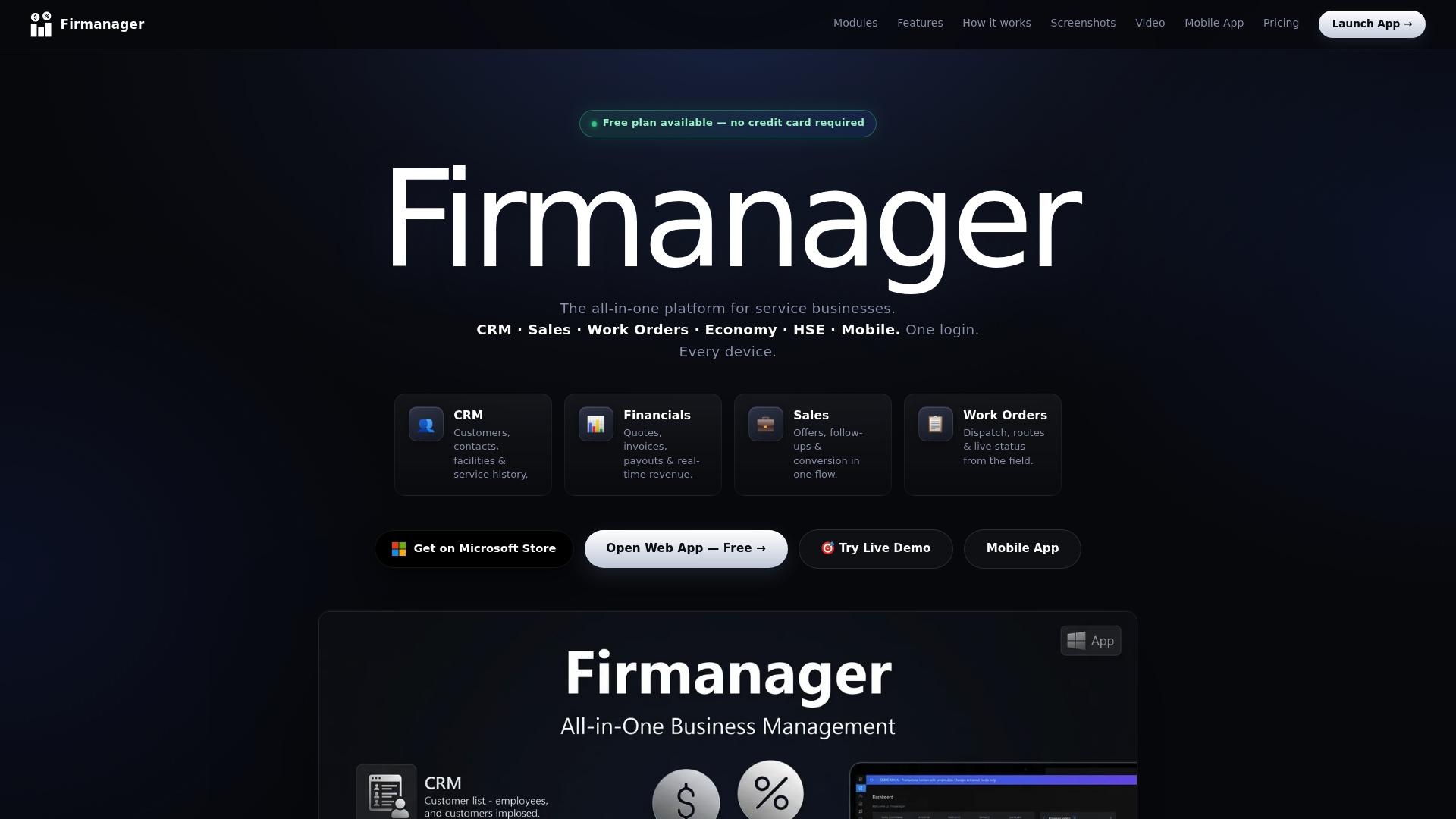
- A single login can cover CRM, HR, invoicing, and field service management, so leave data need not live in a separate system.
- Cloud sync helps keep status and balances current across devices, beneficial for teams managing crews in the field.
- Notifications via SMS and email help keep employees and approvers informed without extra manual follow-up.
If your current leave process runs on email threads and spreadsheets, explore available business management plans to find options that might fit your team size and start setting up your workflow today.
Sources
For deeper research, see the BLS data on paid sick leave access and the DOL’s FMLA guidance on medical certification.
- elaws - Family and Medical Leave Act Advisor
- Fact Sheet #28G: Medical Certification under the Family and Medical Leave Act | U.S. Department of Labor
FAQ
What are the four steps of a leave approval workflow?
A practical leave approval workflow runs through intake, validation, routing, and recording. Intake collects the request details, validation checks eligibility and balance, routing sends it to the right approver, and recording locks in the decision with an audit trail.
What is an approval workflow?
An approval workflow is a defined sequence that moves a request from submission to a final decision, typically through one or more designated reviewers. For leave specifically, it also includes recording the outcome for compliance and payroll purposes.
How do I write a leave approval?
A leave approval should confirm the dates, duration, and leave type approved, along with the reviewer’s name and the date of the decision. Keeping the wording consistent across approvals makes the record easier to audit later.
How long can an employer take to approve a leave request?
There is no single legal deadline for approving routine leave requests, but a common operational target is a prompt decision within a few working days for short requests to avoid bottlenecks. FMLA-related certifications follow their own timeline, with employees generally given at least 15 calendar days to submit medical documentation.
Recommended
Run your whole business in one place
CRM, quotes, work orders, invoicing, expenses, HR and HSE — one login, every device. Free-forever plan.
Start free →